kimberlysteele: (Default)
Submit your question or request for a general "what's up this week" reading and I will be happy to oblige!


I am happy to read your Ogham free of charge -- that's how I hone my divination skills -- but if you want to donate for it, I'll happily buy myself a book, a snack, or a cup of tea while on the town. Please only donate if you can absolutely afford it. I've been there. Your prayers for my continued success are welcome whether you donate or not!


Or donate via Givebutter
Donate via Givebutter text to (202) 858-1233 using the code KSS21

***************Readings are closed for this week, please join me again next Monday!*****************

Open Post

Apr. 28th, 2021 11:31 am
kimberlysteele: (Default)


Please feel free to comment on anything and everything. Thank you for not using profanity.
kimberlysteele: (Default)
Submit your question or request for a general "what's up this week" reading and I will be happy to oblige!


I am happy to read your Ogham free of charge -- that's how I hone my divination skills -- but if you want to donate for it, I'll happily buy myself a book, a snack, or a cup of tea while on the town. Please only donate if you can absolutely afford it. I've been there. Your prayers for my continued success are welcome whether you donate or not!  


****************COMMENTS ARE CLOSED FOR THE WEEK OF APRIL 26, a bit early as I am suffering a bit of exhaustion from some events in my private life. Please feel free to comment on existing threads though!*********************
kimberlysteele: (Default)


To dream is to sort. Dreaming is a process not unlike sorting the laundry before it is washed.

In dream-sorting, the bad stuff goes first. The initial phase of sleep plunges us into the lowest part of the astral plane to which we vibrate. The lower astral plane is the level of passions, urges, and strong emotions. To be caught in the lower astral feels like hell. When I used to suffer regular night terrors in my teens, it was so scary that my experiences made me horror-movie proof. I cannot be frightened by a horror book or film. Because I have a fairly decent memory of the lower astral, I find light sleep unpleasant. I try to avoid naps if possible: they are anything but refreshing. If dreams are a day swimming at the pool, then for me naps are being splashed with puddle water by an oncoming car while fully dressed. 

The Lower Astral

All beings pass through the lower astral but it is only the nasty ones (or the foolish) who want to hang out there. Ouija boards and seances access the lower astral. Suicides are often trapped between its layers, bouncing between the middle and higher astral and the etheric planes. Demons populate the lower astral, hoping to find hosts who can be suckered into a relationship. Why 19th century Spiritualists and their modern day equivalents failed to realize this baffles me: don't they understand the grey-water function of the lower astral in the series of planes? How is it that I know better than to stay in such a polluted place, as a former atheist no less? I find it astounding that seasoned professional mediums ignore the grave danger they put themselves in every time they deliberately channel what they think is a client's dead relative, and with no banishing ritual! The lower astral is, for lack of a better word, dirty because of its function. The lower astral is meant as a pit-stop, not a final destination or an entertainment lounge.

Dreaming is returning home, and it is a glacial process. I often dream about the cottage my parents used to own on a small lake in a nearby state. In the dreams I must pack to leave the cottage, which luckily was sold some twenty years ago just as my parents became to old to handle the long drive there and back. Packing in my dreams represents getting life stuff done on the material plane. For me, this means writing, running a music lesson business, performing, and starting a subscription library. Naturally I always dream I am running late. Packing also symbolizes the preservation of things I deem important, whether that means literally learning how to pack vegetables into canning jars or hanging on to the treasure trove of written language for other people's future great-grandchildren.

That Middle Layer: The Mid-Astral

Thank goodness the mid-astral is where I remember most of my dream time.  The function of the middle astral is also to sort, however, it isn't as crude of a wash as the lower astral where the larger chunks of grime are dealt with.  The middle astral is why dreams have a reputation for being silly.  There's nonsense in it, all sorts of Jungian symbols, ice cream castles in the air, animals who speak fluent French, and whatever goofiness you're prone to imagine.  During this form of sleep, the higher self separates and goes to hang out with the highest plane of beings it is attuned to while the conscious part of the self that usually has to do the "adulting" gets to play around with the themes of the sandbox of life.  Like any form of child's play, this sport isn't necessarily relaxing or fun.  I was the sort of child who hated childhood -- I am much happier now as a middle-aged woman.  For me, play often felt too dramatic and too pregnant with possibility of where it was leading me. 

The real question is "Who is my higher self hanging out with in Mid-Sleep?"  I get brief glimpses of it if I'm lucky: a flight over the ocean, a sunlit grove, some snippets of orchestral music.


Nostalgia vs. Nihilism

Mostly I don't remember the good stuff because it is harder to remember.  Allow me to repeat myself: the good stuff is harder to remember.  That's why we need to try harder to remember it.  Yes, I am talking about nostalgia.

Nostalgia can be extremely toxic.  The playwright Tennessee Williams had a knack for capturing the toxicity of nostalgia: think Laura's mother in the Glass Menagerie, forever pattering on about gentleman callers as she tried to imprint her halcyon days upon her pale, cowering daughter.  Nostalgia often paints the good old days in a wholly unrealistic light: maybe Pleasantville wasn't so pleasant after all, all things considered.  Nostalgia siphons off all the warm fuzzies and then pretends the rest of it never happened.  Nostalgia cleanses the past, or at least it cleanses our perception of it.  Nostalgia, taken too far, is taking pessimist nihilism and spinning it around to the opposite pole, which is an equally bad thing.  Nostalgia is of vital importance because it is our window to gratitude for the past.  Without the sorting effect of nostalgia, it is extremely difficult to remember anything positive or happy because of our evolutionary tendency to remember negative events.  

The past is what it is.  When considering it, we need to take into account that it is a spectrum between two poles: nostalgia and pessimist nihilism are only useful insofar as they allow us to see the spectrum between them.  The past was the best of times and it was the worst of times.  Neither should we shed too many tears for the loveliness of what was nor should we stew in frustration for the unchangeable horror that was.  The truth was always somewhere in the middle.  All of our ideals from back then may be tarnished, but that doesn't mean we should leave them behind.

When I was a child, my grandmother and grandfather would babysit my brother and me at their house in northern Illinois so my parents could catch a break.  During those weekends, I remember playing with a toy called a Lite Brite.  The Lite Brite was a black box with a lightbulb in it.  It had plastic pegs you could stick into a grid of holes to make colorful displays.  The nostalgist in me wants to romanticize the Lite Brite, to see it as  a representation of an idyllic childhood.  In this childhood, I could paint myself as a beautiful but misunderstood genius child.  The pessimist wants me to see it as plastic landfill junk, the stupid wastefulness of a decadent age for a spoiled, miserable brat.  The truth is in the middle. 

Time flies and the events of only a second ago are already in the past, never to be re-lived.  Mistakes can and will be made.  I suppose the trick is not to overreact, to put it into perspective, and to keep plugging away.

We are all on our way back home, better late than never.   


kimberlysteele: (Default)
Submit your question or request for a general "what's up this week" reading and I will be happy to oblige!


I am happy to read your Ogham free of charge -- that's how I hone my divination skills -- but if you want to donate for it, I'll happily buy myself a book, a snack, or a cup of tea while on the town. Please only donate if you can absolutely afford it. I've been there. Your prayers for my continued success are welcome whether you donate or not!  


kimberlysteele: (Default)
In brief, Sun Tzu talks about two things in this chapter: the importance of getting in and out quickly if there is going to be combat and knowing to mine the enemy for resources instead of one's own forces.

One and Done

Never, says Sun Tzu, should you involve your armies in a protracted, long series of campaigns. "One who excels in employing the military does not conscript the people twice or transport provisions a third time." Either make war quick and efficient or don't bother, which is to say Sun Tzu feels about war like I have always felt about shopping.

A great example of the abject failure of a long campaign is the measures that have been taken against the economic damage of COVID shutdowns, otherwise known as stimulus checks. The war would have been over had government and the mainstream media taken a different turn in 2020. COVID, a disease which at its most lethal kills far fewer people than cancer or diabetes any given year, could have been exposed as a nothingburger as early as April 2020. Instead, we Americans were peppered with a fusillade of "free" money, the cost of which is the current recession which may well become a new Great Depression. Not only was the relief badly aimed, it was a disguise for leftist government grift to fund ridiculous ventures such as modern art museums and gender reassignment surgeries in Muslim nations.

"No country ever benefitted from prolonged warfare" cautions Sun Tzu. Onlookers watching the collapse of the American empire take note of the shambles all around us: America has been at war to exploit new territories long before 1776, and look where that got us. The leaders of China don't seem to be willing to learn from American mistakes. Hell-bent on becoming the next Great World Power, they have gone to war with both their own citizenry and their land, raking both over the coals in the name of Progress. The greedy CCP takes paving paradise to put up a parking lot to a whole new level: the ghost city. Ghost cities are the eerie vision of China at war with itself, gaming and cannibalizing the strength of its own people in order to display the ever-less-convincing trompe d'loeil version of power.

For All The Young People Out There: A Warning

To take it down to a more personal level, I would advise any person considering college right now to heed Sun Tzu's advice in this chapter, and that is to make college short and sweet. College, now more than ever, is a war to cheat you (and this includes your parents and your future self) out of as much money as possible for a tiny scrap of education you probably won't be able to use. Personally, I had to invent my job as a music teacher after the long fight to graduate with a Bachelor's of Music in 1995. Nobody else I know teaches in their field. My high school friend who got a Musical Theater degree ended up translating German textbooks. Another art degreed friend ended up in retail management. Yet another had a degree in Communications, whatever the hell that means, and had every job from car rentals to banking. Most of the people I started musical college with did not make it to year four. The college was gleeful to rob them of their money in exchange for no degree and a bunch of debt, of that I am sadly confident. Not that they could use the degree anyway. If you go to college, do it as quickly as possible. Or just don't go. If I had it to do all over again, I would have taken a couple years at my local community college or in this day an age, a cheaper online college, and then finished the degree while already working as a private music teacher, for instance teaching out of my parent's home or driving to student's homes. What I would not do would be to obtain a Masters or a PhD. College is such a racket these days that I think most people should steer clear of it, lest they be trapped in the unending cycle of undischargeable debt by the time they are my age.

When Empires Overreach

"The State is impoverished when it transports provisions far off." The more I see of the decaying American Empire, the more I understand the genius of medieval Japan. Isolationism has its benefits. Staying local concentrates power.

Speaking of staying home, one of the primary reasons the salary class embraced the Coronapocalypse with such enthusiasm was because it put an end to the supercommutes of a majority of its members. A supercommuter is a person who commutes an hour or more to work each way. Supercommuting is a way of life for the working poor and lower middle classes, but over the years it crept into salary class life as well. Unlike the salary classes, the working poor and lower middle classes did not get to stay at home past the initial months of the Plandemic (if they got to stay at home at all) because their jobs involved "essential" activities such as driving a truck or working a cash register at the grocery store or more typically they could not afford a hiatus in pay.

To this day, unionized Chicago teachers have refused to step back into their classrooms, ostensibly because they're scared of COVID. Yeah, right. It has nothing to do with chaotic schools as babysitting operations/low security prisons for materialistic, shiftless, violent young adults with no better place to be and chips on their shoulders.

For the average salary class woman who actually loved her husband, the Coronapocalypse represented the first break the poor guy had gotten since his college days. The man who barely graced his family with his presence every other weekend suddenly was not a ghost anymore. All those business trips, golf games, business dinners, and supercommutes got cancelled. Suddenly the Big Cheese breadwinner was home, real, and involved with the children he sired. Isolation has its benefits.

Every person who has the luxury of working from home saves a ton of money: travel of any sort is expensive and time consuming. A long commute, Sun Tzu would say, impoverishes our State.

My issue with the above teachers and salary class telecommuters is their dishonesty. If only they would just admit it: they like having three extra hours a day and getting paid the same amount of money. Instead they give us a steaming dish of sanctimony with sides of fear porn and mask theater. Increasingly, we see peeks at a scheme that made salary class lives more pleasant and comfortable by design with little thought for the human expense.

Starve and Plunder Your Enemy 101: How Much Is Too Much?

"Thus the wise general will secure foodstuffs from his enemy." The salary classes have done this, except the enemy was the corporations they work for and/or draw stock benefits from in a parasite/host relationship. The salary class finally managed to turn the tables with COVID. Instead of the salariman or salariwoman being drained of vitality by his or her long commute and grueling office environment, the flow of the company's resources changed direction. The etheric power at home is now isolated in a bubble of apparent safety and not fed upon by a parasitic boss at the end of a long train or auto commute. The trouble here is that by reversing the flow of etheric resources, several albatrosses have been created. One is the empty office: what to do with the giant, empty commercial space where office workers used to congregate? What about the surrounding economies, such as the restaurants that served the office workers? What of the economies that had little or nothing to do with the office workers, such as Broadway entertainers or the little chess club that barely eked out an existence in the best of times? Starving the enemy and forcing his resources to flow to you stops making sense when you wake up and realize you've made a *glass factory of the land you intended to colonize. Just saying.

Sun Tzu suggests we assimilate our enemy and (eventually) treat them well -- it worked for Genghis Khan! Such a strategy avoids the blundering idiocy I mention in the above paragraph. Treat your client states well. Don't be like China, the US, or the salary class: overextended, thoughtless, doomed.


*"glass factory" is American slang for the aftermath of detonating a nuclear bomb
kimberlysteele: (Default)
Submit your question or request for a general "what's up this week" reading and I will be happy to oblige!


I am happy to read your Ogham free of charge -- that's how I hone my divination skills -- but if you want to donate for it, I'll happily buy myself a book, a snack, or a cup of tea while on the town. Please only donate if you can absolutely afford it. I've been there. Your prayers for my continued success are welcome whether you donate or not!


********New readings are closed for the week of 12 April but please feel free to comment on existing threads.  See you next week for more free Ogham readings!*********
kimberlysteele: (Default)
The western industrialized world has a problem with etheric starvation. Though it is probably the most dismissed phenomenon of our time, etheric starvation affects every aspect of our lives and is the secret to understanding our most dreaded diseases, especially addiction and auto-immune disorders.

Etheric starvation easily goes unrecognized in an era when it is downright unfashionable to acknowledge the etheric plane. Beyond atheist-materialist delusions that only one plane exists, Meatworld, we have already been introduced to the subtle planes. They include the etheric, the astral plane of the imagination and dreams, the mental plane of abstract concepts, and the spiritual plane which is the domain of forces much smarter than humans. The etheric, to my mind, is one level more subtle than smell, that is to say it is nearly physical. People who have a good sense of the etheric can read a room by walking into it. They know how the weather will be tomorrow by the color of the air today. They can walk into an empty house that is for sale and sense what kind of family lived in the house a few weeks before. They are often good at mundane tasks that give comfort to others, such as arranging furniture, construction, sewing, cooking, and/or cleaning.

Etheric Energy Transfer

Human life is a constant set of etheric energy transfers. For instance, last Sunday I went to a small Easter celebration at my parents’ house. Holiday gatherings are etheric pyramids. The host becomes the head of the pyramid and must make an etheric sacrifice, usually in the form of cooking food, to the guests. The guests in turn rev up the etheric energy in the place where the party is thrown and send it back up the pyramid in the form of imagination and memory (astral plane forms). In order for the etheric pyramid to become strong, people must physically be present and around each other, which is a huge part of the reason food is so important. When the host cooks, much of his or her etheric power is transferred to the food, and that power comes back when the guests sit around enjoying the food. An Easter gathering on Zoom cannot by its nature facilitate the transfer of etheric energy because the physical component is missing. This is why social distancing wrecked so many families, businesses, and churches — take away the etheric transfer and you no longer have a bond. To add insult to injury, when the etheric transfers are subtracted, you get rampant etheric starvation.

Etheric starvation was already a huge predicament because of the hideous disfigurement modernity has wrought upon the land. Every ugly highway, brutalist office high-rise, asymmetrical McMansion, chain link fence, and casually-discarded cigarette butt poisons the etheric plane and drains it of the energy we need to replenish ourselves. Our ancestors may have lacked indoor plumbing and transcontinental air travel, but in comparison they seldom dealt with etheric starvation. Our forbears were surrounded by sources of etheric wealth such as close knit communities, beautiful and pragmatic architecture built on the human scale, and easy access to wilderness and semi-wilderness. Us? Not so much.

What It Feels Like

We are all familiar with etheric starvation, I think.  Etheric starvation feels a great deal like hunger but it cannot be satisfied by eating.  It has the same hollow, tired feeling.  If you've ever laid in bed, unable to sleep because your mind is racing yet you have yet to think of anything important or meaningful, that's probably etheric starvation.  If you've been bored yet too tired or lazy to do anything about it, that is probably etheric starvation.  Listlessness in general points to etheric starvation.  The urge to eat far too much, to binge drink, or to spend hours in front of a screen when you don't have to is often etheric starvation.  Being drawn to people you cannot have or who treat you badly is often a condition of etheric starvation.  You don't want them so much as you want their energy to fill you, whether you realize it or not. 

Etheric deprivation manifests as depression, excessive fear, anger, hopelessness, and anxiety, but by far the most common symptom of etheric deprivation is addiction. Addiction is the most instinctive remedy when you have an etheric deficiency; it seeks to fill the void of etheric energy with food, alcohol, drugs, shopping, sex, you name it. The etheric plane is a plane of satiety: to be etherically fulfilled is to have a sense of well-being and comfort like the kind that comes from eating a lovely meal or getting a good night’s sleep. Addicts destroy their ability to feel satisfied, that is to say they zap their etheric bodies. Food addicts abuse food until their bodies cannot handle the glut and begin to shut down because of the strain of excess fat tissue. Drug addicts raise their threshold for happiness until the only thing that can facilitate the semblance of joy is ever-increasing amounts of drugs. Sex addicts pour their energies out until their etheric body is a hazy, compromised, torn up mess.

Repair of the Etheric Body

Like most people, I have problems with etheric starvation. In my case, it likes to manifest in the form of depression because I don’t have issues with addiction. The best fix-it strategy I have found is a daily banishing ritual: in my case, that is the Sphere of Protection. The reason this seems to work is that it cleans the aura while repelling future etheric and astral attacks.

For those who do not or cannot do a daily banishing ritual, a combination of prayer and daily hoodoo baths is the next best thing. Any hoodoo type bath seems to be better than none, whether that is a cool shower or a full-on river baptism. By prayer, I don’t mean incessant begging, meaningless rote memorization, and masochistic self-deprecation that has become endemic when praying to an Abrahamic deity. Prayer, at least in my case, only seems to work when I express genuine gratitude as a foundation of the relationship. Gratitude sublimates where begging for more goodies degrades.

Pinterest = Evil

When I have etheric depletion, I tend to turn to Pinterest. For those of you who are like “What is Pinterest?” it is a digital bulletin board where you can save snapshots of web pages that interest you. Mostly, it is a waste of valuable time, though every now and then I stumble across a great recipe or a craft project I actually end up turning into a real-life item instead of leaving it to languish as a pipe dream. Pinterest reminds me of a marijuana high: relaxed, colorful, and full of delicious recipes I’ll never attempt to make and craft projects that I’ll never do. There are certainly worse ways to soothe the pangs of etheric starvation, but Pinterest is unfortunately a gateway to all kinds of toxicity, for instance, this race-hustler masquerading as wellness guru who popped up on my feed.

Other Methods of Etheric Repair

Remember that etheric deprivation arises from not spending enough time in the sunlight — if scientists ever manage to pull their heads from their rectums and study the etheric body, they’ll likely find it can be fortified with daily Vitamin D supplements — so if you have etheric deprivation and it’s sunny outside, for heaven’s sake just GO OUTSIDE.

The main thing is to get away from the computer, and I savor the irony of typing that sentence as it is a sunny day with perfect weather, yet look what I’m doing!

Think of cooking a well-crafted meal, even if the meal is made by you and for you, as a way of replenishing the etheric body via alchemy. By transmuting the ingredients of your dish by a labor of love, you create a potent etheric fuel.

Cleaning a room, thanking it for its gifts on a daily basis, and adding a decorative touch will amp up its etheric power and boost your etheric health.

Turning on music you like, seeing a live performer, or performing music yourself is a great remedy for etheric starvation.  Music is "painting the air with sound waves" to paraphrase composer Kim Carcone.  To add to the effect, burn incense as an offering to the gods, light candles, or heat scented oil in a diffuser.  This will charge the air with another dimension of pleasure.  

Getting rid of the television is probably the greatest thing that you can do to improve the etheric quality of your living space.  The television, even when off, radiates foulness.  Anything that functions as a prosthetic for the imagination will act as a vortex of dissatisfaction and confusion.  Televisions create noise pollution and they cause people to be distracted and rude.  Many Americans find it normal to have the television on in a room when they are having a conversation, and it's no big deal to completely derail one's train of thought to comment on an item that flashed across the screen.  The larger the television screen and the sound system that goes with it, the worse the etheric drain on the room.  I would sooner put a lidless toilet in the middle of my living room wall than a television.  If I ran the world, televisions would not be allowed in hospitals, doctors offices, or any place healing was supposed to occur.  

Playing with your kids (not video games) or pets provides etheric nourishment for you and them. If you are sensitive, make a note of the vibe of a room before and after you’ve played with your pet in there. I think you’ll find it improves.

Picking up trash at the forest preserve or anywhere else will give you a huge etheric boost, as it is a form of gratitude to the land and a service the gods smile upon.  

Overall, to heal etheric deprivation, one must "earth out" the frenzied "tired and wired" energy that etheric deprivation causes.  Cooking, playing with kids and pets, or heavy-exertion activities such as gardening or scrubbing floors will do the job.  All too often, the etherically starved will seek to remedy their starvation by bingeing on food, sex, or chemical stimulants and tranquilizers.  Such a strategy is doomed to failure.  Food, sex, and drugs in moderation are fine -- if you're not etherically imbalanced, you are unlikely to want to over-consume. 

There's a common trope of envy for the Italians and the French.  I will call this the Mediterranean Lifestyle trope.  In the Mediterranean Lifestyle, everyone eats beautiful, healthy, handcrafted meals while sharing wine with friends.   The men are hardworking and suntanned and the women are effortlessly slim and chic in the Mediterranean Lifestyle trope.  They can be seen in the flesh if you can manage a flight to Provence, and then maybe you can partake in their semi-rustic sun-drenched utopia.  Etheric richness is what we envy about the Mediterranean Lifestyle trope.  I'm here to tell you that you too can have the trope even if you cannot replicate the lifestyle.  Etheric richness is not unique to Italians, the French, the lucky, or the wealthy.  Every one of us has the ability to repair our etheric bodies and spaces, but it is up to us to figure out which methods will serve us best as individuals.  

kimberlysteele: (Default)
Submit your question or request for a general "what's up this week" reading and I will be happy to oblige!


I am happy to read your Ogham free of charge -- that's how I hone my divination skills -- but if you want to donate for it, I'll happily buy myself a book, a snack, or a cup of tea while on the town. Please only donate if you can absolutely afford it. I've been there. Your prayers for my continued success are welcome whether you donate or not!


*******************New readings are closed for this week but you are welcome to comment on existing threads.  More Ogham readings next week, thank you for visiting my corner of Dreamwidth!*******************

Open Post

Mar. 31st, 2021 01:20 pm
kimberlysteele: (Default)


Please feel free to comment on anything and everything. Thank you for not using profanity.
kimberlysteele: (Default)
Submit your question or request for a general "what's up this week" reading and I will be happy to oblige!


I am happy to read your Ogham free of charge -- that's how I hone my divination skills -- but if you want to donate for it, I'll happily buy myself a book, a snack, or a cup of tea while on the town. Please only donate if you can absolutely afford it. I've been there. Your prayers for my continued success are welcome whether you donate or not!


*********************Readings are closed for the week, but feel free to comment on existing threads. Thanks and stay tuned for more Ogham readings next Monday!**************************
kimberlysteele: (Default)
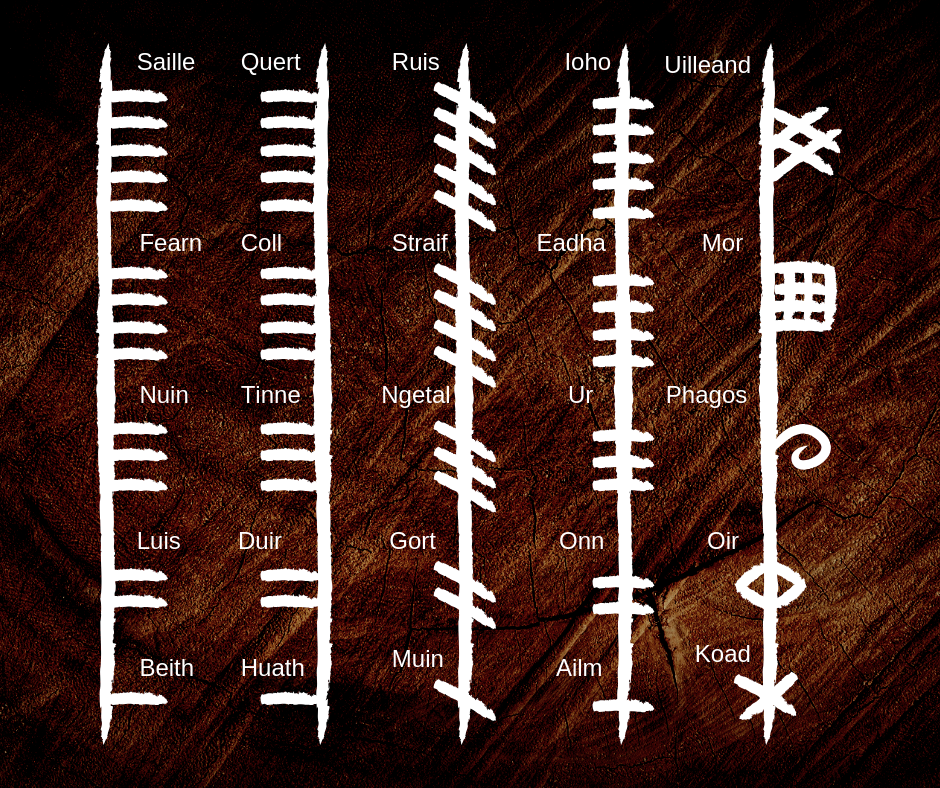
Since I began studying Druidry, it has taken existing obsession with plants (one that began in my pre-teen years) to a new level. One of my plant fixations of late is coming up with an Ogham for the trees, shrubs, and smaller plants for my geographical area, which is suburban Chicagoland.

For those of you who are like, "What the heck is Ogham?" I have a website for you! Also, I do free Ogham readings every Monday.

I highly recommend researching one's own Ogham for the unique are where you live. Unless you live in Antarctica, it will be a fascinating dive into the flora of your environment.

Here is the alphabet:


Northern Illinois Prairie Ogham

1. Beith, Beginnings. This was Birch and stays Birch, but instead of Betula Alba or silver birch I have changed it to the North American native birch Betula papyrifera or Paper Birch. They are called paper birch because the bark at the trunk peels off like paper. This is a tree that I saw a great deal growing up, usually in front yards. It's not so popular these days but it is still around.

2. Luis, Protection. This was Rowan in the old system. I have changed it to Sugar Maple (Acer saccharum) because of my many relationships with maple trees and the commonness of the tree in the Chicago area. I have two older maples on my parkway as well as one of their saplings in my front yard -- I pull up hundreds of maple saplings every year in my yard. The sugar maple is a glorious tree that can grow to astounding heights. They are beautiful in every way. Their fall color is a glorious gold. They are also a food tree (you tap their trunks for syrup) and I think they'll become much, much more important as food sources in future eras when petroleum isn't cheap and food cannot be shipped from great distances at low cost.

3. Nuin, Communication.  This was Ash in the old system.  I have changed it to the quirky yet graceful Ginkgo biloba.  The Gingko biloba or maidenhair tree is the only living tree in an extinct species of tree called Ginkgophyta.  This species has been around since the Jurassic era (200 million years ago).  Though it is a native tree of China, it is a tree that is widely cultivated in the Midwest.  I think of it as an autistic's tree -- I mean no insult as I am a high-functioning autist -- as it is an oddball among trees for its ancientness, for its smooth, fan-like leaves, and its medicinal properties.  Ginkgo helps improve mental concentration.   

4. Fearn, Guidance.   Though the Black Alder or Alnus glutinosa is considered an invasive non-native in my area, I am not changing it for the moment because it is an important tree for preventing shorelines from eroding (a big problem for anyone near Lake Michigan).  Alder is a colonizer tree that goes where other trees dare not go.  It loves wet, swampy conditions.

5. Saille, Sensitivity.  White Willow or Salix alba.  This is another "if it ain't broke, don't fix it" tree that I grew up with.  It's not native but it is common in my area.  Willows are great for taming bogs and swamps and they are one of nature's greatest medicinal plants.  I take white willow bark most nights to sleep through the night; it is a gentle sleep aid and painkiller.  Willow branches aren't just medicine -- a tea of them can help other plants to root.  Willow is very flexible (hence its attribution to perfect balances of sensitivity in my Ogham system) and one can make all sorts of cool things from baskets to chairs to fences from the branches.  

6. Huath, Barriers.  This was a tough one to decide.  I felt I had to change it because hawthorn trees (the original tree in the "regular" Celtic Ogham) just aren't common around the Chicago area.  I don't even see them in nurseries with any reliability.  So I decided to change it to the Sycamore tree or Platanus occidentalis.  Like the hawthorn, there are myths about sycamores that forbid them from being cut down.  In the case of the sycamore, an old Wyandotte Indian myth warns of a horrible death befalling a settler who dared cut down a sycamore tree.  

7. Duir, Gifts.  Though the White Oak (Quercus alba) is a European import, it is literally Illinois's state tree.  There are huge forests here dominated by white oak.  It is also my favorite tree in the world.  The native oak here is Quercus rubra or red oak.  One can tell the red oak from the white oak by its leaves.  The red oak has sharp-tipped leaves and the white oak has rounded leaves.  As a child, I learned that the tipped leaf was red like the American Indian's arrowhead and the rounded leaf was the shape of the white man's bullets.  

8. Tinne, Defense.  Holly trees and bushes aren't common in my part of the US.  The grassland here gets too hot and dry for them in the summertime.  I have nearly killed a large nursery holly tree in my yard -- pray for that poor guy, please, he needs it.  For this one, I have chosen the equally prickly Eastern cedar, Juniperus virginiana, which is actually not a true cedar but as the name belies a member of the juniper family.  Juniperus virginiana is reliably common in my area and can be seen along roadsides, in forest preserves, and in my yard.  Unlike holly in my area, Eastern cedar tolerates drought, extreme Midwestern cold, and high wind.

9. Coll, Wisdom.  The Red Oak or Quercus rubra, as previously mentioned, is native to the Midwestern US.  It's a bit faster growing than white oak and its acorns provide food for everyone from squirrels to deer to humans.  The oak is my favorite tree.  I also attribute Coll to another native Midwestern oak: the grand Burr Oak or Quercus macrocarpa.

10: Quiert, Delight.  This is the Apple or Crabapple tree of many varieties and hybrids.  I kept this one the same, considering Johnny "Appleseed" Chapman's efforts to propagate the Europe-imported Malus species not far south from here.  The first pie I learned how to make as a child was apple pie.  

11. Muin, Harvest.  For this, I felt compelled to change the vine of this Ogham from grape to tomato.  There is a family of plants that most of the world (especially people who aren't born in the Americas) take completely for granted: Solanaceae or Nightshades.  Solanaceae is a huge family that includes tomatoes, potatoes, and every kind of pepper except black peppercorns.  Imagine Szechwan, Indian, or Thai cuisine without hot peppers.  Italian food without tomatoes.  Imagine Ireland without potatoes.  Yep.  It never happened before the European discovery of the Americas. Nobody ever burned their mouth out on overzealously spicy Indian cuisine before 1500 or so.  All of the Solanaceae plant family is native to South and North America, period, full stop, end of sentence.   
 
12. Gort, Perseverance.  The Hedge Bindweed, an Illinois native, replaces Ivy.  Hedge Bindweed looks a great deal like Morning Glory or Ipomoea because it is also in the huge Convovulaceae family, but its Latin name is Calystegia sepium.  I battle to keep bindweed from throttling the young oak sapling in my yard.  It's a very pretty plant, with delicate, round white flowers and thin, trowel-shaped leaves.  

13. Ngetal, Hygiene.  Broom is the original attribution in the European Ogham.  Broom simply does not grow around here unless you buy it.  Instead of broom, I have chosen the similar looking Goldenrod, Latin name Solidago riddellii.  It is in the same family as sunflowers. Goldenrod is extremely common in the Illinois prairie and grows profusely along roadsides and fields.  Medicinally, it is a potent tonic and was used in Native medicine to cure infections, especially UTIs.  

14. Straif, Inevitability.  The thorny Honey Locust, Gleditsia triacanthos, replaces Blackthorn in this case.  Honey locust is another tree I grew up with.  It is native and so robust that it is considered an invasive species.  It sheds obnoxious black peapod-things every fall and has a distinct odor.  People have an affinity for the tree anyway.  For whatever reason, two of my neighbors growing up had honey locust trees, and one ended up with a bird impaled on its branch for enough time for the bird to completely rot away, right in the front yard in fancy pants suburbia.  They were strange neighbors.

15. Ruis, Regret. The native to Illinois Black Walnut replaces the Elder in this case, despite the fruit not being as easily edible to humans because of the extra hard husk of the nut which is under a thick ball of green fruit.  The black walnut, like the elder, is a formidable tree with legends swirling around it.  Like the elder, it is a tree of great medicinal value.  Black walnut was used by the American Indians for dye and by early settlers to cure parasitic worms and syphilis.

16. Ailm, Transcendence.  Ailm or Elm is another tree I did not have to modify, as the original attribution is either fir or elm.  I choose the Siberian elm (Ulmus pumila) in this case, as the American elm has been sadly devastated by Dutch elm disease and has become uncommon because of it.  Siberian elms are fast growing with tiny leaves that stick to clothes like cat or dog hair.  

17. Onn, Community.  Gorse is also not common in northern Illinois, so I have replaced it with the extremely common Wild Bergamot, also known as Monarda fistulosa or Bee Balm.  Like gorse, Monarda is a happy, tough plant beloved by pollinators.  Also like gorse, it is used medicinally.  Monarda is known as a throat soother and a fever reliever.  

18. Ur, Intimacy.  Heather is not a common plant in the Midwestern prairie, so I have replaced it with Big Bluestem, a native grass that is one of many that populate almost any patch of land that is allowed to be wild.  Big Bluestem is so abundant that it is Illinois's official prairie grass.

19. Eadha, Limits.  The Quaking Aspen stays for this tree designation, as it is a North American native tree and by that virtue not a tree of the ancient Druids in the first place. 

20. Ioho, Grace.  Yew also retains its position in my Prairie Ogham.  Yew is found commonly in cemeteries just as it is across Europe.  It's a hardy nursery evergreen.

21. Koad, Grove.  My particular area in the far western Chicago suburbs is wooded -- when wild spaces take over in the not too distant deindustrial future, they will be as much woods as grasslands.  My micro-niche in Aurora is dominated by maples and oaks.  The white oak is the most common tree in our local woods.  

22. Oír, Epiphany.  The old attribution for this position is the Spindle Tree.  I replace it with milkweed, which is crucial to monarch butterfly populations and native to my area.  

23. Phagos, Teaching. The mighty Beech tree stays put for this spot in the Ogham.  Beeches were once used as paper -- that's how I think beech ended up with this attribution, because Phagos is about immersing oneself in enough knowledge to be able to pass it on.

24. Mór, Change. There is no tree for this one that I know of, so I attribute it to the Typha, otherwise known as Cattail.  The Cattail is a native plant that loves wetlands and watersides.  

25. Uilleand, Generosity.  Uilleand was Honeysuckle, and though honeysuckle are not difficult to find in the Upper Midwest, I have altered it to Trumpet Vine.  Trumpet Vine is a similar plant to honeysuckle -- it's a climber, graciously offering its nectar to pollinators and hummingbirds, and its blooms are a cheery orange-yellow.

 What's the Ogham of your area?  What trees and plants in your area best suit the designations currently allotted to the traditional Celtic Ogham that I based my Ogham upon?


kimberlysteele: (Default)
Submit your question or request for a general "what's up this week" reading and I will be happy to oblige!


I am happy to read your Ogham free of charge -- that's how I hone my divination skills -- but if you want to donate for it, I'll happily buy myself a book, a snack, or a cup of tea while on the town. Please only donate if you can absolutely afford it. I've been there. Your prayers for my continued success are welcome whether you donate or not!


******************Thanks Everyone... Readings are closed for this week, see you next Monday!******************
kimberlysteele: (Default)

A few Tuesdays ago, I felt the call to study the Art of War. Unbeknownst to me, Dreamwidth bloggers Violet Cabra and Read Old Things had already felt the same urge. As most of you can sense, there are some big changes happening in the astral plane right now. I believe that the urge to study Sun Tzu's Art of War is part of that. Though I cannot speak for my fellow Ecosophians, I believe I got the transmission from Ares himself or one of his messengers. I have prayed to Ares before to understand and begin to resolve issues in my personal karma.

Ares, at least as far as I can tell, controls the discharge and accumulation of the harshest forms of karma. He is a fair god: he gives us plenty of opportunities to deal with our karma outside of violence, but because we are human, it's unfortunately rare for us to discharge our karma via the higher road of being willing to face it and deal with it upfront. Instead, we tend to put it off, place blame, and make it someone else's problem until it comes flying back in our faces in the form of a war, a natural disaster, or a more personal form of misfortune.

This series will have an overarching theme about dealing with bad karma as it comes, preventing it wherever possible. I will be doing these posts in the place of the normal post that occurs Mondays or Wednesdays on the third Tuesday of each month until the book is complete. Like John Michael Greer's book club, I'll field new comments for the month of the post until the new post arrives.

Thanks for joining me in this discussion. I know I probably don't need to ask, but I have a no-profanity policy on all of my posts. Thanks for your understanding.

Sun Tzu opens the first chapter with:

"Warfare is the greatest affair of the State, the basis of life and death, the Way (Tao) to survival or extinction. It must be thoroughly pondered and analyzed."

Life Is A Battlefield

This is to say that life itself is a constant war. We live on the material plane. It is NASTY here. The meat plane is a battlefield in every single way. Nevertheless, even in more subtle planes of imagination (astral) and the spirit, there are always forces fighting against others, pushing and pulling, struggling against limits presented by the Universe itself and of each other. That's just our world. What Sun Tzu is saying is that you have a choice: you can sit idly by and refuse to contemplate the Eternal Fight -- however, that way lies extinction.

Warfare is the greatest affair of the State can also be interpreted in the most direct sense. A country is made or broken by its attitude towards war. That's why the US's terminally frivolous, imperialistic, denialist approach to the occupation of other countries is breaking the US. Such a strategy can only work for so long: compare the revered soldiers of World War I and II to the reviled, disposable soldiers of Vietnam. Investment in previous failures has not been thoroughly pondered and analyzed enough for the US to sensibly back down from Empire and wars for cheaply available petroleum. The guilty parties who will be on the receiving end from the cavalcade of bad decisions in the form of mass karma include me, a person who drives a car every day as an act of continuing Sartrean bad faith.

Friends, Enemies, Frenemies

Denial of war does not make it any less real or pertinent. To analyze war, you must ask yourself: "Who is my enemy and why am I fighting them?"

For me, the enemy is my former friends and the people I grew up with who still dwell in the gilded cage of the upper middle class I fell from approximately a decade ago. They are in denial that they are racists who accuse people of lower classes (and these days, anyone who disagrees with them) of being racist so they can continue to believe in their own virtuousness. They are the mainstream media dog whistlers who co-sign shutdowns and riots that collapsed the world economy. They are the obedient, brainwashed maskturbators who decided nobody who worked in the arts was "essential" enough to continue to make an honest living.

My enemy is the clueless drug dealer in my neighborhood who could get me shot at any time because of the drugs he moves across competing drug-dealer's neighborhoods.

My enemy is the government official who wants to raise my taxes and take away my rights. My enemy is the Federal Reserve, a private bank that exists in order to enslave me and everyone I love.

My enemy is my former self, a person who put very bad patterns into play that I've had to back out of and make amends for in my current path towards being a better self.

Picking Your Battles

There are five types of questions that we are instructed to ask of ourselves and of our side before going into battle.  Knowing the answers to these questions guarantees victory... and that's the catch.  It would take a god to know all of the answers to the questions.  Nevertheless, we are told to ask them, and there are five main aspects we should ask about.

The first question, "Who has the Tao?"  relates to the specific world you occupy.  Sun Tzu says that "the Tao causes people to be fully in accord with the ruler."  This is the idea of going in the direction of the wind rather than against it.  As much as American culture loves the trope of the fearless rebel who saves the Lost Ark from the Nazis with nary a scratch for his efforts, it's much easier to work with the nature of one's time and place in the world.  The Tao is your overall environment, most of which you can do nothing about.  As an example, I once threw everything I had at acquiring a live-work situation where I would teach lessons in a commercial space and live above the space in an apartment.  Because of the anti-pragmatic spirit of the times and the particular part of the map where I have settled, suburban Chicagoland, this arrangement quickly proved to be impossible on my modest lower middle class budget.  The zeitgeist of the times was against me six years ago when I tried to obtain grants from fast-talking development council grifters and real estate shady ladies in search of big commissions.  My Lost Ark: the suburban arrangement "without a future" in the scathing words of James Howard Kunstler, was not to be recovered from the SS, at least not by me personally, at any rate.  All's well that ends well: I live in a modest house that isn't ideal for hosting music lessons, though one day I may teach out of it yet out of necessity.  

The Karate Kim

The second and third questions, those of generals, Heaven, and Earth, has to do with limits.  Who is better at working with limits, you or your enemy?  This question alludes to the art of choosing your battles wisely.  When I was a child, I took karate classes in hopes of managing the inappropriate amount of anger I had towards other human beings despite my soft, plush suburban upbringing.  Though karate helped me to be in peak physical condition as a youngster, it absolutely was not meant for me and I think it was more damaging than helpful.  I went into my first tournament thinking that I could kick butt.  I was paired to fight with a chunky girl of my own age who, at twice my physical size, beat me into the ground, causing me bruises and more anger than I started with.  The limits of my anger were quickly realized: all bark and no bite, no trophy, no resolution until the novels I would write many, many years later in order to exorcise the demons of past lives.  

Discipline, Political Correctness, and Slimebaggery

The fourth question, "Whose laws and orders are more thoroughly implemented?" is a question of discipline.  A sloppy army, perchance one that lowers its physical requirement of pull-ups from 30 to 3 in order to appease the self-appointed tyrants of political gender correctness such as the US Marine Corp (they're lowering the requirements for men because women cannot physically measure up), will have no chance against the modern equivalent of Sparta.  For us non-soldiers, we have to ask which path we're traveling -- the Left Hand Path, the Right Hand Path, or the Middle Way of bouncing around until we evolve at the glacial pace nature designed for us.  The Left Hand Path hopes to cheat natural law, to gain ground by stomping others into the morass, to invoke the heady powers of sleaziness and degradation in a frenzy of self-lathering adulation.  The Right Hand Path demands recognition of natural law and adherence to strict codes of live and let live; that is, no cheating and attempting to cajole others to force your own solipsistic will on the Universe.  The Middle Way, the most common approach, is the bumbling Way of the Iceberg, reacting and not acting unless pressed upon pain of death.  Arguably, the Chinese Communist Party, with its Left Hand Path wargames of international demoralization, mass enslavement, and other slimebaggery, is headed for history's dustbin of overwrought empires right along the US... eventually.  In the short run, however, he with the most disciplined team wins, as can be proven at any kid's sports championship near you.

The Jewish Woman Who Was Like Donald Trump

When asking yourself "Whose forces are stronger?", it's another way of asking "What are my weaknesses?"  This means we have to be honest about the shadows we are projecting, lest we end up going into battle with the enemy who is actually not the enemy but a shadow projection of our worst selves; a mirage.  Of course I'm going to bring up the Left, those ardent love-haters of the projected Shadow.  I once used to pal around with a vegan who loves to hate Donald Trump.  She would be horrified of my analysis of how much she is like Donald Trump.  Like him, she is extremely crass, American, and loud.  Many of her so-called achievements have more to do with being born to wealthy parents than her own natural talents or hard work.  Like Donald Trump, she is overweight and aging.  She too likes to act as judge, jury, and executioner when someone says something she doesn't like, lashing out with vile ad hominems that have no place in civilized argument.  No wonder she loves to obsess about Donald Trump -- what would she do without such a convenient straw man to target in place of working on herself?

When we ask ourselves, "Whose forces and troops are better trained?" This asks if we truly have allies in intimate places, and if so, are they prepared for what could be thrown at them for being associated with the likes of us?  For instance, there is a whole crowd of people I do not envy, and that is the crowd of parents with young children.  As someone who works with children, from my vantage point, there are few children escaping unscathed from the year plus of semi-school and mask theater we've all been forced to take sides in.  The kids being raised by double-masking parents ought to be able to sue someday for irreparable damage due to child abuse.  Such children, upon adulthood, will have been trained to fear life itself.  I cannot see it ending well for them.

Good Business Practices

Lastly, there is the idea of clarity of punishment and reward.  My husband has had quite a few jobs in the last dozen or so years.  Most of them have featured the usual bumbling, inept business heads that make the American workplace an infamous cesspool of misery as portrayed in the film The Office.  One place, however, had a great policy left over from its glory days of fair corporate practices, and that was of rewarding employees with good attendance with paid time off and punishing employees who showed up late without calling or otherwise notifying management with immediate termination.  My husband, steadfast and punctual, racked up paid time off which he happily used to do projects around our house.  

Sun Tzu all but guarantees our success if we take into account every factor mentioned above.  Me?  I don't think so, but thinking it through is worth a shot.  

The Lies of War

His next advice to us concerns warfare as a Way (Tao) of deception.  This is classic poker -- don't show anyone your cards.  My mom is the classical embodiment of Midwestern Nice.  This is because she actually is extremely nice, but it is also because Midwesterners are not raised to wear their hearts on their sleeves.  Midwestern Nice is the ultimate poker face: you don't tell someone how you actually feel when they ask, "Hi, how are you?"  That would be against the rules.  You are supposed to say "Fine, how are you?" and suss out the undercurrents of what's really going on from their body language and subjects they do and do not cover.   

A Point of Contention and of Agreement

Sun Tzu suggests creating disorder in one's enemy's forces in order to take them and perturb them when they are angry.  Here is where I diverge from Sun Tzu.  If you truly hate your enemy, and I truly hate mine, you will hate them enough to ignore them.  You won't have time or interest in creating disorder in their forces because you'll be too busy creating a thrust block in order to push yourself far above them.  I hate the maskturbators, but instead of trying to create disorder in their ranks by yelling at them in grocery stores, I go to the grocery stores that don't force me to diaper my face for luxury communism.  I go around them.  

Sun Tzu then suggests if they are rested, to force them to exert themselves.  I agree here, and so does Donald Trump, who often used his Twitter feed or other publicity to force the Left to spend all of its energy in predictable outrage while he quietly passed laws or made deals that helped the lower and middle class workers of the US.  As I predicted, Donald Trump now rules from the sidelines as the Left hangs itself with the rope it cheated to acquire.  

In Conclusion

As for attacking when the other side's troops are unprepared, I think of my garden, which is much easier to till in the early spring than any other time of year.  After the harsh March ice (we had a mini-snowstorm today, good times) and pounding April rains, the soil is just loose enough to get seeds in.  Any later and I will be battling weeds, hardness, and dry Illinois clay.  I "attack" before my enemies (really my frenemies, because I love weeds) get their foothold on my garden, and then I mulch so my plants of choice have a chance at becoming fully grown.  

Sun Tzu then suggests we retire to the ancestral temple to determine whether or not we will be victorious... I think this is his way of saying Meditate On It!


kimberlysteele: (Default)
Submit your question or request for a general "what's up this week" reading and I will be happy to oblige!


I am happy to read your Ogham free of charge -- that's how I hone my divination skills -- but if you want to donate for it, I'll happily buy myself a book, a snack, or a cup of tea while on the town. Please only donate if you can absolutely afford it. I've been there. Your prayers for my continued success are welcome whether you donate or not!


**********************Readings are now closed for the week, see you next Monday!***************
kimberlysteele: (Default)


I don't have health insurance.  Like an increasing number of Americans, there is no way I can afford it.  Luckily for me, the last major health event I had was in the year 2002 when I was in my late twenties and came within thirty minutes of losing my life.  I had good health insurance at the time provided by my husband's employer -- this was back when he had a salary class job.   I had suffered with genetic gall bladder disease, but as an adoptee with only one (hostile) known birthparent, it was a total wild card.  The intense pain I suffered for nearly two years before the emergency surgery remained a mystery despite the consultation of two different doctors in my PPO.  There was also the fact that I don't like to tell people, not even loved ones, about my health problems.  I have always had the habit, for better or worse, of masking my health issues as I find it unbecoming to constantly complain about pain.  Pain, after all, is a sign of my approaching death, and complaining about the inevitable is annoying.   

Not long after that, the salary class company my husband worked for went belly up.  Never again was he able to land a salary class position, and he spent the better part of three years holding out for a replacement.  At the end of the three years, which was marked by depression, loss, and poverty, we had been pulled from the bottom-feeding part of the upper middle class to the lower middle class.  For me, it was a new experience: I grew up in the upper-middle class, and though my parents were bounced out of it in the 1990s, they never landed in the economic abyss where I found myself.

Somewhere along the way, I went vegan.  I was a vegetarian when the gall bladder thing happened.  I'll always at least partially blame my consumption of dairy products for exacerbating my gall bladder disease (the night it happened, I had eaten a cheesy Italian pasta dish at a restaurant and a créme brulée for dessert).  Though I went vegan for the animals, the health benefits for me were astoundingly obvious.  My digestion became regular for the first time in my life and my ability to concentrate became markedly better.  Adopting a plant-based diet does not help everyone, however, there is a preponderance of evidence that animal products are highly inflammatory and that eating less of them lowers one's risk for lifestyle diseases such as type II diabetes and cancer.  Would I have had gall bladder disease if I had been vegan my entire life?  Probably.  Would my gallstones have nearly killed me at age 28?  I don't think so.  

Dance of the Doctors

Long before I ran around trying to find a doctor to diagnose my gall bladder pain, I had my doubts about doctors.  As a college student, I suffered two different bouts of pneumonia.  This was back when nobody cared if a college student was hacking their lungs out while still on campus.  I was not quarantined -- I was expected to show up for class.  If I could go back in time and be my own doctor, I would have told my younger self to quit smoking immediately, to get two solid weeks of rest at home, and to complete a regimen of zinc lozenges after healthy, protein-heavy vegan soups and fruit juice along with daily bouts of mild exercise the second I felt up to it.  Even now in the age of COVID paranoia, there's no doctor I can name who would suggest such a logical routine.

The medical professionals of our era are professional buck-passers who have lost any power to heal to the corporate interests that have the entire medical profession in a death grip.  To become a medical professional in the US is to join a game of musical chairs for which the speed of the music is always accelerating.  As far as salary class professions go, medical doctors have the worst of all worlds: for their mouse-find-cheese unoriginality, they are rewarded with life-ruining debt and the threat of being sued into oblivion at any moment. 

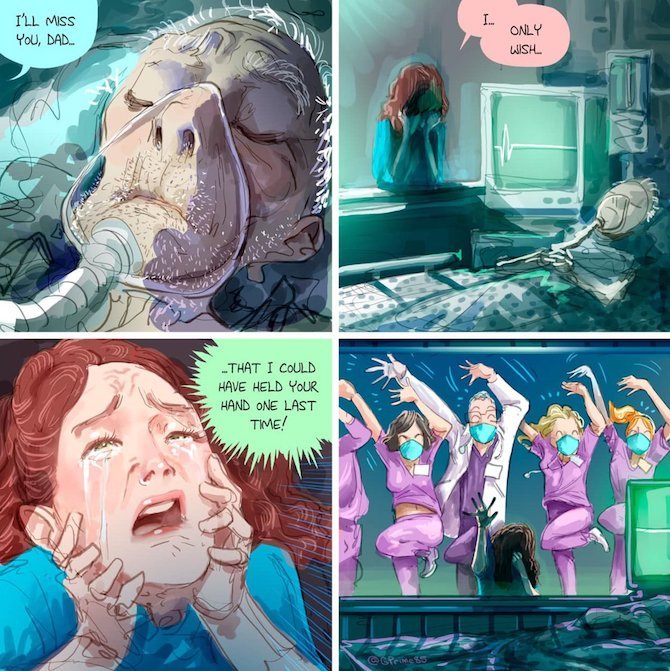
People who chose medicine as a career are no longer the essential worker heroes they were prior to the nothingburger flu: they are now the dancing villains of TikTok, hated for their arrogance when they are not avoided for their pricey incompetence.  Unless it has to do with setting a broken bone or amputating a gall bladder, doctors no longer have a function.  They do not cure diseases -- their Big Pharma corporate overlords won't allow it.  They prescribe antibiotics without a thought about antibiotic resistance.  They force chemotherapy on people who don't want it and imprison them "for their own good" when they do not comply.  They wouldn't know a Plantago major if it managed to bite them on the leg, let alone its medicinal uses.  They have become worse than useless.  There are good doctors and nurses, of course, but until the few genuinely good ones grow a spine and start treating patients completely off-grid and away from the prying eyes of Big Pharma and Big Insurance, I'll be steering clear.  Not that I could afford to see one anyhow.

A Predicament for Those Who Enjoy Staying Alive

I am perfectly aware that if my gall bladder had waited until I didn't have health insurance, I would most likely be dead.  Perhaps some heroic physician would have saved me despite my lack of health insurance -- but remember, I had no time to wait.  A bit of bureaucratic back-and-forth would have sealed my doom; my gallbladder was gangrenous and this was not discovered until the moment of the surgery.  I am fine with the thought of dying.  I was fine with dying at 28.  Of course I'm glad that didn't happen.  Though I love my life, when my number is up, it is up.  I would feel much more angry on a daily basis if I had a kid.  The uninsured families of the US are in the horrible position of their child's lives being threatened because the US health system is broken beyond repair.  To add insult to injury, the Derp State's Potato-In-Chief has resurrected the Obamacare penalty for people who cannot afford health insurance.  For this he says, "You're welcome," or at least he does when he remembers his own name in-between adult diaper changes. 

The real cherry on the cake is the attempt of Bill Gates and pals to vaccinate the planet with an RNA hijacker with either a trans-humanist or post-humanist agenda.  Nobody is sure whether the point of the vaccine is to debilitate/kill most humans or to colonize their bodies with self-replicating tracker nanotechnology, but all not taking it seem to agree that those who opt in are playing a game of Russian Roulette.  Who stands idly by, nodding their heads to the government's beat?  People in the medical profession.  Like in the case of the church leaders who could not have found a more ideal time in history to stand up to tyranny by re-opening churches on Christmas Day, medical professionals have largely taken the path of least resistance and cowardice.  

What I Do

If you're a lower middle class American like me, you have no choice other than to take your healthcare into your own hands.  For me, this means I have learned to recognize and combat the little inflammations of my body before they become big ones, and also the Stoic acceptance that I will likely die of what is considered a treatable malady such as cancer or an accident because I cannot afford even the most crucial forms of American healthcare.  

I can only speak for myself, but I make it a priority to minimize my consumption of processed food, to grow at least a small portion of my own food, and to treat all food as medicine.  The phenomenon of etheric starvation is real; I'm planning an essay on it not too far down the road.  I believe I can avoid disease by eating etherically-rich food whenever possible.  The bulk of my diet consists of fruits, vegetables, bread, and rice.  

I prioritize my mental health as well as sleep -- time in wild spaces, i.e. "nature" helps both.  

I mostly avoid over-the-counter drugstore remedies.  Though they are necessary every now and then, I only use them when I feel I absolutely must.  I take an array of herbs to bolster immunity and to relieve pain.  I take herbs in the form of capsules or teas. If I have body aches or trouble sleeping, I take white willow.  For constipation, I take slippery elm.  For urinary problems, I take uva ursi and cranberry.  I drink a variety of teas with gentle medicinal properties -- for instance, Alfalfa Mint as a general health tonic or Chamomile Anise to relax.  I take a Vitamin D supplement every day. 

In short, I try to avoid trouble, but if I die, I die.

It's the best I can do with the situation I have been given.  


kimberlysteele: (Default)
Submit your question or request for a general "what's up this week" reading and I will be happy to oblige!


I am happy to read your Ogham free of charge -- that's how I hone my divination skills -- but if you want to donate for it, I'll happily buy myself a book, a snack, or a cup of tea while on the town. Please only donate if you can absolutely afford it. I've been there. Your prayers for my continued success are welcome whether you donate or not!


*************************Readings are closed for this week, see you next Monday!*****************************
kimberlysteele: (Default)

Thinking Like a Mage series:

https://kimberlysteele.dreamwidth.org/tag/thinking+like+a+mage

In the dream I am in Chicago, the city where I was born. I am trying to wind my way home through a sea of concrete and steel. I have one imperative: to get home. The sun is setting in the dream. It's almost never morning or midday. The horizon glows like hot coals being snuffed by the ragged petticoats of approaching night. The feeling this inspires is terror. Chicago was never a friendly place for me. Though both my parents grew up there in the 40s and 50s, by the time I came of age, the criminal element was enough to inspire awe in coddled suburbanites like myself. Nevertheless, Chicago always had the cool factor and its subsequent allure. There is a je ne sai quoi about the place; a beautiful hostility. In my dream, Chicago is the danger presented by the madness of other humans forced to live cheek to jowl. I am often forced to cross dangerous intersections on foot, waiting for brief traffic light signals, or stepping carefully through railroad junkyards, navigating piles of discarded infrastructure. Lake Michigan often figures prominently in the dreams, the edge of which is a flooded road. I drive my car through hip deep water, worried about stalling out.


The Journey of a Trillion Steps

Dreams are personal but not unique. As far as I can tell, Chicago represents the cycle of lives that I dwell in, along with everyone else. We all are part of this age of cheap petroleum, which is as far from the era of natural, easy communion with spirits and gods as the human race is ever going to get. We live in an age of atheists, many of whom who are still faux-faithful and preoccupied by nature-hating religions co-opted by greed. This greed is accompanied by disregard and haughty disdain for the unseen worlds with which religion is supposed to better acquaint us. We live in an age of rampant overpopulation, and as a result we have blotted out every influence upon this world except our own material one. Driven to mass psychosis, we anxiously await punishment for our own hideous wickedness in the form of an Apocalypse that (thankfully) never arrives.

The age in which we live is Chicago on steroids. I am but a cog in the machine, hence the dreams. I long to be home with my Creator, and like all people, animals, and plants born into my age, I travel a long and dangerous road on my way back home.

Sometimes I dream common dreams like the one about the multi-storied Mall, or the creepy School.  These are also shared metaphor dreams that speak of the monkey's-paw trap of the meat plane and commercialism.  They represent the long, hard educational processes of the soul: how to play nice with others, how to build a mental sheath.

Understanding French Films

Outside the world of dreams, you can get your fill of metaphors simply by looking up a French film that stars the great actress Isabelle Huppert.  I kid, but what I am saying is that if you can glean the underlying message of an art film to the point where you can be satisfied by the messages it is trying to communicate, congratulations, you've just mastered a set of metaphors.  I am from the Midwest, and what that means is that my tribe doesn't wear its heart on its sleeve.  Midwesterners practice a form of extreme Nice that masks a pulsing cauldron of emotion at any given time.  What is said is only half as important as what is not said.  

In life, knowing when to keep one's mouth shut is a priceless skill -- the art of slamming limits down around one's speech is potent protection.  Understanding metaphor is the key to understanding the astral plane.  To understand metaphors takes great subtlety and the ability to discriminate between what is the metaphor and what is not the metaphor.  There isn't much that is subtle about the material plane but you have to learn subtlety in order to successfully and happily navigate it. 

Here's a goofy question for you: If your life was an art film, what would be the underlying messages?  If our era was an art film, what would it be trying to say?  Personally, I think our era would be a dark comedy about a spoiled child who is given too many toys and throws escalating tantrums when Mommy and Daddy fall on hard times and can no longer afford to buy her nice things.  

Everyday Metaphors

At least six times a day, I kneel in seiza to serve my cat a thin stream of water into a bowl.  She could drink water out of the bowl like a normal cat, but I serve it to her in a special way to communicate to her, the spirits, and the gods that I love her.  This seated position has become a metaphor for my dedication to cats in general, but especially for my passion for my own cat.  

Nearly every day, I get into my car and travel to and from work.  This is an act of bad faith -- I don't like driving and never have -- and has become symbolic of all the things I do that are against my own will yet feel trapped into doing.

The black and white keys of my piano represent a highly flawed system of music theory (double sharps and unnecessary time signatures, anyone?) that is nevertheless magnificent and the soul of Western music.

Metaphor calls us to pay attention, to suss out the meaning of our lives, and to understand the limits we must work within in order to return to the forces that made us.  

kimberlysteele: (Default)
I have had a lot of experience with hypnogogic states, for better or for worse. For reasons I'd rather not go into detail about on this post, along with my daily Sphere of Protection, I do other things to avoid hypnogogia.

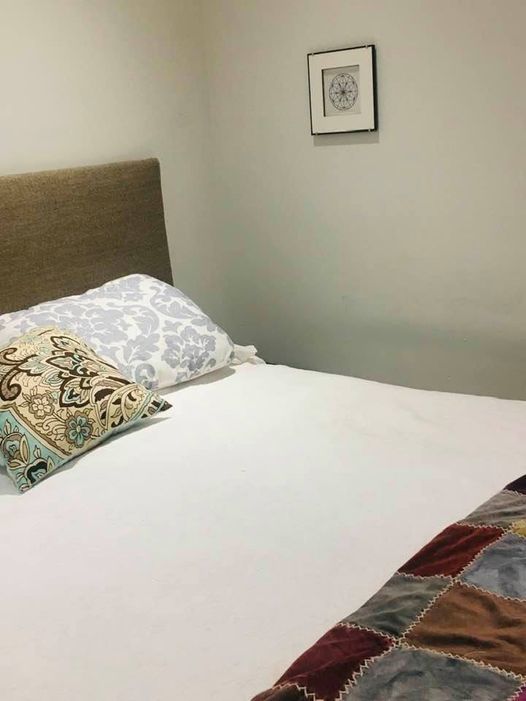
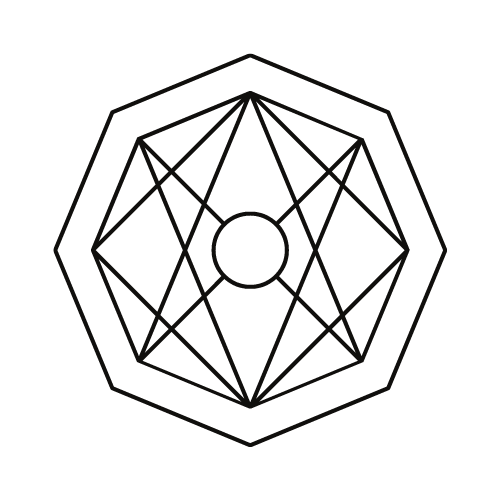
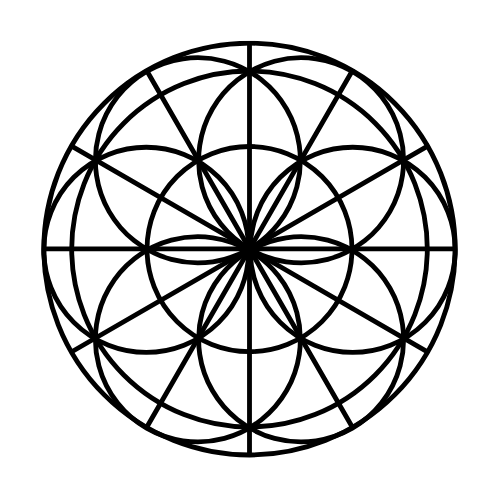
On the natural magic front, I have found that putting a geometric symbol near the bed is a huge deterrent to entities who would otherwise feel free to mess with me. I'll be explaining exactly why & how I believe these symbols work in my upcoming book Sacred Homemaking, but for now, the short version is they act as spirit traps. Placed near the sleeper, they draw in the entity (that wants to mess with the sleeper during hypnogogia or night terrors) on the astral plane and lock them in an unending pattern.

Similar images to the ones below are available for free at Canva.com. If you'd rather not go through the trouble, I have made a PDF with some good sacred geometry glyphs HERE. Print the glyph/glyphs you like the best and either stick it on the wall or place it on the bedside table near where you sleep.

Here you can see the round demon trap I have put by my own bed, printed on computer paper and made in Canva.com in only a few minutes:


Here are the symbols -- again these are just random free ones from Canva. You could always draw your own or find other geometric symbols, these are not the end all and be all! Time to dig out the old Spirograph, right? I am considering having my husband put up a geometric wallpaper across the headboard wall!


kimberlysteele: (Default)
Submit your question or request for a general "what's up this week" reading and I will be happy to oblige!


I am happy to read your Ogham free of charge -- that's how I hone my divination skills -- but if you want to donate for it, I'll happily buy myself a book, a snack, or a cup of tea while on the town. Please only donate if you can absolutely afford it. I've been there. Your prayers for my continued success are welcome whether you donate or not!


Profile

kimberlysteele: (Default)
Kimberly Steele

December 2025

S M T W T F S
  1234 56
7 891011 12 13
14 151617181920
2122232425 2627
28293031   

Syndicate

RSS Atom

Most Popular Tags

Style Credit

Expand Cut Tags

No cut tags
Page generated Jan. 1st, 2026 01:20 pm
Powered by Dreamwidth Studios