![[personal profile]](https://www.dreamwidth.org/img/silk/identity/user.png)


Back in the day, there was a great deal more reverence for so-called pop princesses. It seemed like EVERYTHING to be one of them. When my little friends and I played Barbies or starred in the grade school talent show, it was all in service of the vision of ourselves as the next big superstar. Stars used to have clout and that’s why we watched them so avidly and kept track of their lives via magazines and award shows. It was exciting to see people who were recognized for their talents and the pop princesses of yore had talent in spades. Carole King wrote songs for herself as well as Aretha Franklin, James Taylor, and the Beatles. Barbra Streisand had an amazing voice. Janis Joplin electrified every performance until her tragic death (under fishy, Clive Davis-connected circumstances). Stevie Nicks was uniquely amazing.
There are compelling rumors that Beyonce, who attended many Diddy parties, forces other artists to acknowledge her at awards shows as a form of tribute. The Beyonce rabbit hole goes very deep and if nothing else reveals that she should probably not be allowed around children. To see her finally failing after the forced farce of Cowboy Carter, a garbage black “country”album that suspiciously swept awards shows, provides a warm dose of schadenfreude. She is finally beginning to taste the obscurity she richly deserves.
All pop princesses wear leotards and/or bikinis onstage. It is as if there is a “no pants allowed” rule if you’re a major label artist recording a video or performing on tour. I get that pop music is more about entertainment than actual music. I am still sick to death of the goddamned leotard. When I hear a good song, the very last thing I am curious about is what the artist’s butt looks like. Having a perky derriere should not be a prerequisite for musical success, yet as we have seen with the hundreds of one hit wonders who are pushed aside for a single pop princess, there does not seem to be any other way than shaking that ass.
To read this article with photos and silly captions, click HERE.
Though it is arguable that the pop-star-as-harlot trend began with Nancy Sinatra and Boots Were Made for Walkin’, it didn’t track until Madonna and her early eighties Reagan era schtick. Madonna’s voice wasn’t much but the songs she chose were fun, irreverent, and carefree. Yes, there was a time when Madonna wasn’t an insufferable, pompous wretch. Madonna quickly morphed into the creature we know today, a metastasizing schizoid chimera’s head of new personalities, one for every passing trend. Like Madonna herself, pop devolved from goofy and fun to shock and awe. Nearly all hip hop was Diddy-fied and nearly all pop was Madonnaed. Both genres became tools to cover for rapists, including child rapists. Both genres reflected the abject worship of death.
They took the audience
For every Beyonce, there are a hundred flash-in-the-pans such as Nikka Costa, Elle King, and Tones and I. One hit wonders still hit and disappear. For every one hit wonder artist, there are thousands of could-have-beens with talent that was equal or greater to the one hit wonder artist, if not Beyonce herself. Beyonce is not and never has been particularly talented except perhaps as a vocalist. She is slightly above average as a singer but she is not anywhere near the vocal talent of Ariana Grande. Her songs are co-written, and if we translate from the Bullshitese, that means she takes credit for other people’s creative work and calls it her own. Now that Beyonce’s looks are fading and she and her husband are being revealed as malefic Luciferian witches, Beyonce’s glamours are developing deep fissures. Beyonce as a brand is soon to be relegated to the Walmart clearance aisle.
It could not have happened to a nicer person, LOL. Beyonce is an awful human being who all but admits to murdering a woman in cold blood in a song lyric.
Your body laid out on these filthy floors
Your bloodstains on my custom coutures
Bathroom attendant let me right in
She was a big fan
I really tried to stay cool
But your arrogance disturbed my solitude
Now I ripped your dress and you're all black and blue
Look what you made me do
-Beyonce, Daughter
There are compelling rumors that Beyonce, who attended many Diddy parties, forces other artists to acknowledge her at awards shows as a form of tribute. The Beyonce rabbit hole goes very deep and if nothing else reveals that she should probably not be allowed around children. To see her finally failing after the forced farce of Cowboy Carter, a garbage black “country”album that suspiciously swept awards shows, provides a warm dose of schadenfreude. She is finally beginning to taste the obscurity she richly deserves.
The trouble with the one pop princess who beats out the hundreds of one hit wonders who beat out the thousands of Never-made-its is that thousands are not able to make a living or gain a following in music because of the pop princesses soaking up attention and money. Live music has taken a real beating in the last fifty years. Rates of pay for live shows have stayed exactly the same as they were in 1978 with no adjustment for inflation. Cover is where all the money is and anyone singing cover has to live in fear of being shaken down by the performing rights orgs such as BMI and ASCAP. When the performing rights org gestapo catches a nine year old singing Bruno Mars in a coffee shop while her music teacher accompanies her on guitar, it is all hands on deck to put the coffee shop out of business with astronomical licensing fees. A small restaurant near where I live in suburban Chicagoland was put out of business for hosting open mic nights with unlicensed cover songs. Meanwhile, YouTube has millions if not billions of cover songs being broadcast any given second that somehow are of no matter.
Pop princesses have dominated the scene long enough that I perceive their demise as shocking. I never thought I would see the end of them but it seems the memes have spoken: the pop princess era is aging badly. South Park started having a field day with J.Lo back in 2003, ruthlessly mocking her as Cartman’s hand (job) puppet. In 2012, a meme called Beyonce’s Final Form heralded the beginning of the end for Mrs. Carter, who stupidly attempted to force “everyone” to take the meme off the internet. This backfired spectacularly, and now the enduring image of Beyonce that will always live in the hearts of the masses is utterly unflattering. Awww.
There is a particularly savage meme going around TikTok using combined footage from various pop princess’s concerts. The meme borrows the soundtrack from a 2008 SNL spoof of the Laurence Welk show featuring the fictional Maharelle Sisters, an old timey singing group in matching, semi-formal, yellow dresses. The sisters sing to introduce themselves in cringey crooner voices. “I’m Janice,” sings the first sister. “I’m Holly,” sings the second sister. “I’m Noraaaa,” croons the third sister in a wacky vibrato. “AND I’M DENICE!” screeches the fourth sister, who has a large forehead, tiny doll-sized hands, and a hefty helping of derp. Though the meme has several variations, Janice is Sabrina Carpenter, Holly is Taylor Swift, Nora is Cardi B, and Denise is Katy Perry in her Lifetimes tour. Katy Perry, for many reasons, has become the butt of internet jokes. Once the reigning queen of pop stardom, she too will be joining Beyonce in the Walmart clearance bin soon.
If I could walk a mile in their leotards, I would pass
All pop princesses wear leotards and/or bikinis onstage. It is as if there is a “no pants allowed” rule if you’re a major label artist recording a video or performing on tour. I get that pop music is more about entertainment than actual music. I am still sick to death of the goddamned leotard. When I hear a good song, the very last thing I am curious about is what the artist’s butt looks like. Having a perky derriere should not be a prerequisite for musical success, yet as we have seen with the hundreds of one hit wonders who are pushed aside for a single pop princess, there does not seem to be any other way than shaking that ass.
I had that body once upon a time and I suppose had I had slightly different luck, a more symmetrical face, fewer scruples, and less autism, it could have been me pumping booty to some co-written track. Ugh. No amount of money is worth the humiliation these women put themselves through to give the appearance of staying on top. Butts have nothing to do with good music and never will — the sounds that come from the butt cannot be tuned or helped. The Janice/Holly/Nora/Denise meme gives me hope that the Leotard Retard era is finally coming to its close. When they dance in their scanty outfits, they uniformly look like the stripper Cardi B once was. This not only commodifies music, it commodifies dance. I am old enough to remember when dancing was fun and my relatives danced the polka at backyard parties. I remember when dancing wasn’t always overtly sexual and didn’t feature copious attention to the crotch.
It eats them alive
When you are sexualized and commoditized from a tender age, it does horrible things to the brain. There is not a single pop princess that I would describe in a good mental or emotional place, though they all love to pretend they are perfectly transcendent.
Katy Perry is a mess who gets off on torturing senior citizens. Poor Britney Spears has left the building. I have no doubt that evil things have happened to that woman starting when she was a girl. She is broken and bleeding. Christina Aguilera is dysmorphic and probably mutilated. I believe Sarah Ferguson of the Black Eyed Peas was serially raped from childhood. J.Lo became a monster. Lady Gaga is a ritual Satanist. Olivia Rodrigo is mentally ill. Li’l Kim butchered her face. Cardi B. is a political dishrag. Doja Cat is probably mutilated and again is another out and proud Satanist. Rihanna lost her ability to sing. Amy Winehouse is dead. Ariana Grande looks like she is dysmorphic, self-harming, and dying of anorexia. Chappell Roan has dead eyes and dresses like Dee Snider in his Twisted Sister era.
Every one of them is supposed to be a role model. Every one of them undercut thousands of talented artists to sit at the top of a septic astral pyramid that yields diminishing returns for all. Most of them are industry plants. Taylor Swift is the daughter of a Blackrock bigwig. The reason her bland, banal Muzak sucks so bad is because she has the soul of a private equity firm with ancestry to match. Her songs are the sound of a corporate focus group. The same company that buys up middle class housing so they can drive up real estate prices to benefit their shareholders put Taylor Swift on the map and drove her earworms into the soft flesh of little girl’s brains. Disney (with its woke communist agenda) is also owned mostly by Blackrock. Blackrock may have geoengineered the North Carolina earthquakes in a convenient grab of a lithium mine — there is another rabbit hole. Let’s just say I would not put it past them. Blackrock’s executives are not nice people.
To her credit, Taylor Swift is reportedly good to her employees and staff, and she’s nice to fans, which is far more than Jennifer Lopez or Madonna will ever be able to claim. That said, her constant whining and politicizing carries a sinister agenda. If she is a role model, I would like to see some other choices.
At least Swift apparently writes her own music — her shoddy, generic stamp is all over her lame oeuvre. Many of the aforementioned artists cannot bother to pen their own tunes, which means they displaced talented people in order to pimp whatever Max Martin felt like writing any given week. Most people do not know that he writes the majority of pop songs offered to any given major label songwriter. He is Carol King on steroids.
I will conclude this lament with my own hope that pop princesses can be filed away for perpetuity and that local music can regain the foothold it had in the seventies. Perhaps I am alone but I would like to see the next generation of musical women keep their pants and skirts on. Call me a nerd but I would like to hear songs with more than four chords with actual acoustic instruments being somewhat expertly played. I would like this music to be as good live and unedited as it is on recording. I would like to see music divorce itself from porn and pornified culture. I would like to see my friends who are far more skilled at playing live than I will ever be compensated for their skills. I would like to see them be able to make a living off of something besides teaching. It may be too late for me (also I am very happy as a music teacher) but I would like to see them on the stage, exuberant, and very much with all their clothes on.
I guess a girl can dream.
I have re-released a new version of the Orphic Hymn to Hermes (Mercury). Please enjoy. I transposed it in hopes that it will be easier for someone to make a cover version!
New Original Song Somewhere in Time
Jun. 30th, 2024 09:32 pmIf you're an occultist, please drop a comment on the YouTube video of your favorite esoteric book or books.
This is one I have been working on for awhile! I am also working on a musical setting of the Excalibur invocation from the Druid Magic Handbook, please hang tight for that one. It will probably be a couple of weeks. I am planning on doing an Orphic Hymns livestream on Sunday, June 23 for the Alban Heruin Solstice.
K-Pop Sucks
Feb. 19th, 2024 07:08 pm
This is Black Pink. They bore me.
Beauty is in the eye of the beholder. Pop music of any sort these days is more about looking cute than how the artists actually sound, and therein lies the rub. I am OH SO VERY TIRED of the "looks trump sound" proliferation of musical styles. Can we please be done with this kind of trashy cacomusic? Or at least can we be done with obsessing over it? Apparently not. Clearly I disregard my own reputation and popularity because I am going to be the first to say it: K-pop sucks.
A Pale Imitation: Literally
K-Pop, J-Pop, and their Chinese equivalents suck because American popular music sucks to begin with and adding an Asian flavor to garbage results in... drumroll please... Asian-flavored garbage. K-Pop trends always seem to lag about a decade behind the American pop trends they slavishly imitate. When K-Pop was young in the 2000s, it was largely an imitation of the Backstreet Boys and N'Sync. In other words, the groups emanated the vibe of what was trendy in the US about 10 years earlier. By 2010, K-Pop began its love affair with Britney Spears, producing come-hither schoolgirls by the gross. In 2020 to the current day, a hefty amount K-Pop looks like a lite version of US hiphop circa 2010, Travis Scott, Drake, Nicky Minaj, a dash of Black Eyed Peas with a smidge of Beyoncé, also now in her decline. This is all fine and good and I'm not complaining about it -- there is nothing new under the sun and copyright Karens need to go back to hiding under rocks; we all see through their petty greed. It's just a bit uncanny how directly imitative K-Pop has always been, and how it reliably apes the bilge spat out by California music execs of a decade ago.
As I mentioned, K-Pop's current cringey fixation is hip-hop. It is the absolute worst when conformist copycats try to be edgy. American hip-hop is mostly tripe at any rate, but when some post-teen, tormented trainee tries to be their manager's focus group version of "edgy", it winds up about as edgy as a thirteen year old who has stolen her mom's credit card to buy an oversized holiday-themed Stanley cup at the mall. It's not bold so much as it is sad. Even I know that a K-Pop trainee's life is a death march of conformity in body and mind. Trainees are not allowed to have public boyfriends or girlfriends because that would spoil the fantasy. They are expected to conform to impossible beauty standards. Once they age out, they are DONE. They are not allowed to eat... much. A particularly psychotic regime K-Pop idols are known for inflicting upon themselves is called the IU diet. The IU diet, named after a blandly anorexic-looking K-Pop star, involves eating an apple for breakfast and a small portion of brown rice and sweet potato for dinner. That's it. One is supposed to subsist on these two quasi-meals and no other beverages save water until the weight melts off. Plastic surgery is de rigueur for K-Pop idols, whether male or female, at an obscenely young age. By the time they are twenty, every one of them is expected to shave down their jaws, raise the bridge of their Asian nose, and turn their eyes from monolid to double lid. Another fun beauty standard K-Pop's darlings are expected to endure is pale skin. The fixation with white skin happens reliably all over the world except the US and Europe, where most white people still equate being tan with status. We always want what we don't have.
Back to the music, if you can call it that. Conformity isn't just a looks thing in K-Pop music. The whole sound is conformist. Like the Western pop trash it imitates, there is no improvisation or spontanaeity in the tightly choreographed group dances or lip-synched cameos. Keep in mind Western art music (what we plebes call Classical) is dead precisely because it is all rote repetition of old masters and no innovation/improvisation. Classical music is a museum for the worship of the dead. Western pop has gotten somewhat of a revival as internet fans do interpretative covers of famous tunes, but if that music is rarely changed in any significant or meaningful way, it may end up dying the same death as Classical a hundred years down the road.

This is the AI-generated K-Pop group MAVE. There is no discernible difference between MAVE and live action trainee bands. To think that all of those girls and boys are getting surgery and starving only to be replaced by zeros and ones!
When I watch what little K-Pop I can stand -- sometimes I turn off the sound because it is annoying and shrill and plays a distant second fiddle to the visuals anyways -- I feel like I am watching an army of marching zombies, and not the fun kind featured in Michael Jackson's Thriller video. Every video looks and sounds the same, choreographed down to the last miserable inch. I guess K-Pop is fun if you are into fashion, because mostly it is a bunch of people who look like plastic mannequins prancing across rapidly changing, vaguely controversial sets while striking vaguely controversial poses. There is one popular style of K-Pop video where some random K-Pop girl with a generic clothes hanger body stalks about as the outfits change every two or three seconds. Whether male or female, it's always the same slightly pissed off, arrogant, cooler-than-thou grimace under a ton of expertly-applied makeup. In this day and age, of course it begs the question why such perfect people cannot be made by tapping the figments of a computer's imagination: AI. That has already happened, and it is a K-Pop band called Eternity. None of the members of the group actually exist. This is a nice development for the grotesque, middle aged producer sleazebags who create K-Pop: there are no trainees to audition, no mouths to feed, no hotels to book, plastic surgery is instant, and best of all, the "stars" are ageless, hence the name Eternity. In its way, Eternity is a far more honest and direct way for middle aged producer sleazebags to connect with the legions of young girls they want to fleece of their parents' money: via a hologram. The caveat for the middle-aged producer sleazebags arrives belatedly when they realize there are no actual young people to groom, molest, and destroy, which makes me think the AI idol trend may not take off after all.

This makeup took a minimum of 1.5 hours, guaranteed, and we aren't even talking hair or skincare regimen.
The Men
I was looking at my husband in Home Depot while he leaned over a chunk of drywall he was measuring, his big shoulders stretching as his arms opened to wield his tape measure. There is something special about a man who can fix an build things. Fixing and building things is something I am OK but not great at. I admire people, especially guys, who have fixing and building as part of their masculine package. The same big shoulders just aren't exciting on the K-Pop guy who likely spends most of his time getting made up in the mirror before executing his prefab, robotic dance routines when he isn't incapacitated with anesthesia for his latest surgical tweak. Far sexier is the guy who spends a grand total of five minutes in front of a mirror (just enough to wash his face, smooth his hair, and make sure he hasn't grown a second nose or a third ear) before going off to do actual work. The truly sexy man isn't excessively self-conscious about his appearance. In the antique world where I come from, looking pretty is mostly a girl thing. If you want to be a pretty boy, that's fine and good, but you should expect some attention from the gays along with twelve year old girls as your demographic is feminine in one way or another. I prefer a man who is un-enthralled with his looks because they distract from things like working hard, rescuing people and animals in distress, and building stuff. Give me that plain dude any day over the preening eunuchs with guyliner and nightly face routines that cost more than my mortgage, plus the creepy, middle aged, Yakuza-looking producer who is always hanging about because AI phantasms do not give good head.
That Said...
If you love K-Pop, holy hell, YOU DO YOU. It's not my cup of tea but I won't stop anyone from loving it, and if you love it, please go ahead and enjoy my unconsumed share with every blessing. I will shut up now... go enjoy your saccharine, semi-musical, Asian entertainment confections with glee.
A Tale of Two Nutcrackers
Dec. 6th, 2023 09:54 am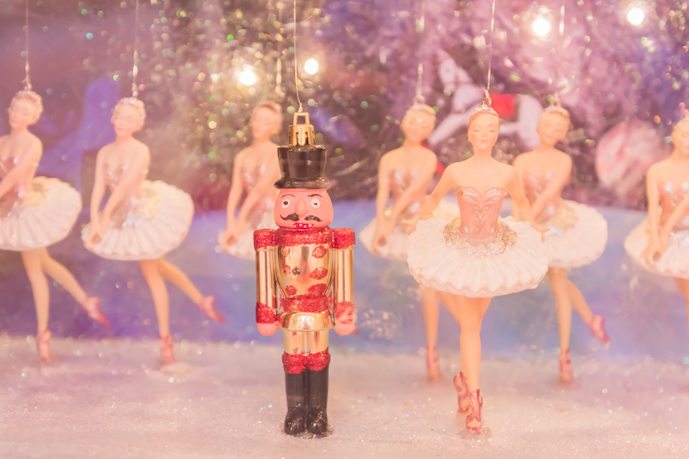
As a privileged, upper-middle class child, I was taken to see the Nutcracker ballet more than once. The Nutcracker ballet is one of those annual bits of culture that aptly represents the frenzy of the holidays: when you are caught in a materialist web as I was, it becomes more about dressing up and going into the city than the actual music or performance. I did not appreciate the magnificence of a live orchestra playing Tchaikovsky back then, despite him being (IMO) the most underrated composer in all of Western music. The music of the Nutcracker is transcendent in that it reaches across gulfs of time, space, and circumstance to evoke both the era from whence it came as well as unique, divinely-inspired genius. If you've ever been lucky enough to witness live music played by the best of professional musicians, you know that it is a mind-blowing experience. There is no comparison between hearing a recording and being in the same room as an orchestra or band. The effect of the live music experience is electrifying and addictive. I personally became so addicted to listening to live music in the perfect acoustic environment of the Auditorium Theater, I did a stint as an usher in college. I wonder if Andy Frain is still only paying their employees seven dollars an hour? I am going to bet it is still in the same ballpark.
Despite being treated to the live music and ballet Nutcracker as a child, one of the first truly inspiring experiences I had with Tchaikovsky's score was not at the ballet but parked in front of a Betamax tape-recording of a 1973 animation from the USSR simply entitled The Nutcracker. Maybe my limited attention span had something to do with my enjoyment, but the weird gravity of that little 25 minute cartoon has always stood out in my mind as more magical as the "real" experience of seeing the Nutcracker as a live ballet.
Once Upon a Time in Pre-Revolutionary France
In the original Nutcracker ballet, the story follows Marie, a young, rich girl. Marie's family throws the Christmas party to end all Christmas parties in what seems like end-of-empire France, like right before the bloody beheading phase for royals and their sympathizers. Marie and her brother, Fritz, are the pampered subjects of an extravaganza of gifts and entertainments in the great parlor. At the center of the parlor is the magical Christmas tree. A brief aside -- as a child, the kids down the block had the most amazing birthday parties. Their mom would hire a magician and if it was summer, there was always an ice cream cake, meaning a cake in which ice cream was essentially built in. It was delicious. At any rate, Marie's parents' party put my suburban neighbors' fete to shame. Marie is gifted with a Nutcracker. She falls in love with the toy. Her bratty brother grabs it and starts cracking nuts in its mouth. One nut is so large, it breaks the Nutcracker's jaw. Marie bandages her toy. When the party ends and everyone goes to bed, she sneaks out to see her toy and falls asleep with it under the Christmas tree.
Meanwhile in Czarist Russia...
In the 1973 Russian animation, an unnamed girl protagonist I will call Tatyana is not the daughter of the master of the house. Instead, she is a humble servant who is clearly not invited to partake in the Christmas party at all. Her role at the party is to clean up the messes left behind by the rich people. Nobody notices or cares she exists when she appears late at night with her broom to clean up under the Christmas tree. (If you'll forgive another aside, as a daughter of privilege myself, I can attest that real Christmas trees shed a terrific amount of needles no matter how well they are watered and humidified. My Dad used to insist on getting a real tree from a Christmas tree farm every year throughout my childhood and young adulthood.) Tatyana sweeps those pesky needles and other detritus and her broom becomes enchanted and dances with her. She finds a nutcracker on the floor with a giant nut stuck in its maw, the result of some brutal rich kid who tried to crack a nut, got bored, and threw it on the floor. Tatyana dislodges the nut and kisses the toy. The toy's eyes light up. It has been brought to life by her kiss.
I will let Wikipedia take the wheel from here:
When she kisses him, he comes to life and is devastated when he sees what he has become. It is then and when the Nutcracker decides to tell the girl his story of how he came to be:
A long time ago, there was a party at a royal castle to celebrate the prince's birthday, which was interrupted by the arrival of the three-headed mouse queen and her spoiled brat son, who both behaved very rudely and refused to leave or improve their manners. In exasperation, the king entered a secret chamber to obtain a poison against the mouse queen, but was locked in by the mouse prince. The mouse prince then started harassing the queen and the baby prince, and when the prince hit the mouse prince, its tail got stuck under the cradle and was hurt. In retaliation, the vengeful mouse queen had cursed the baby prince, turning him into a nutcracker, just before she was vanquished by the king. The king and queen were devastated, and the entire hall was petrified while the mouse prince escaped, taking his mother's crown with him. Now the Mouse King, he declared revenge on the Nutcracker. Eventually, the Nutcracker came to be hanged as an ornament on the Christmas tree within this house.
Just after the Nutcracker has finished his story, mice soldiers begin to appear in the hall, followed by the King of Mice. The soldiers try to get the Nutcracker, but the girl stops them, leading the Mouse King to shrink and capture her. The Nutcracker brings the toys around the Christmas tree to life, and a war is fought between the toys and mice. The Nutcracker is captured, bound and about to be whipped to pieces by the Mouse King when the girl throws her wooden clog at him, knocking off and smashing the iron crown, the source of the Mouse King's powers. The Mouse King's magic backfires, making him vanish in a puff of green smoke which also decimates his army the moment they inhale it and start sneezing.
The clog transforms into a glittering shoe. When the Nutcracker takes up the shoe, his shell falls away and he is restored to his human (and now young adult) self. He puts the shoe on the girl's foot, and her maid's uniform is transformed into a princess gown. The two dance to the royal castle to the music of the Dance of the Sugar Plum Fairy; the king and queen are brought back to life through the Waltz of the Flowers, and the girl and the prince pass into the realm. All that is left behind of them in the human world are the girl's wooden clogs and the crumbled remains of the Nutcracker's shell lying before the Christmas tree.
In the Nutcracker ballet as well as the original E.T.A. Hoffmann short story it was based upon, the rich, young female protagonist rescues the Nutcracker by bandaging its broken jaw. In the Hoffmann version, a seven-headed mouse king wages war on the Nutcracker and his ornament gang because the nephew of the hired magician/entertainer at the party, Drosselmeyer, once pissed off the Queen of Mice. The backstory in the E.T.A. Hoffmann is frankly quite boring: it's a soap opera and not a compelling one. The King gets mad because the mice have eaten the fat from his royal sausages. He enlists his court mage, Drosselmeyer, to make traps which kill the mice. The Mouse Queen gets (understandably) mad and hexes the King's daughter, Princess Pirlipat, making her into a nutcracker. The desperate king promises Princess Pirlipat in marriage to whoever can break the enchantment. Drosselmeyer's nephew ends up being the one to break the enchantment via a convoluted fairy tale arrangement by which he accidentally kills the mouse queen by stepping on her tail. He breaks the enchantment, but upon becoming her gorgeous self again, she rejects Drosselmeyer's nephew and the nutcracker curse falls upon the young suitor, turning him into a nutcracker toy until Marie finds him. The Mouse Queen's son is the one who takes up his mother's crown and continues to wage war on the Nutcracker.
The Nutcracker ballet skips all of the Mouse backstory and cuts directly to the war, which basically happens for no reason as far as we the audience are concerned. The war goes the same way, with all seeming lost until the girl protagonist hurls her shoe at the last scion of Mouse and kills him. The Nutcracker then whisks Marie off to a magical land where she enjoys even more exotic entertainments from Russia, China, Arabia, etc. in Sugarplum fairyland. Tchaikovsky himself considered the Nutcracker the most boring and worst of his ballets, remarking to a friend in a letter that he thought of it as "infinitely worse than Sleeping Beauty."
An Almost-Lost Letter from Tchaikovsky
Yet for a child of the 1980s, the Nutcracker was the only window to the world of Western art music besides Looney Toons and the occasional school trip to the symphony orchestra. I doubt Tchaikovsky knew how very lost the Western art music scene would become, descending into atonalism and the stuntlord, non-musical nonsense of John Cage with his infamous 4'33. He could not have foreseen Autotune, a music-editing software that came from submarine technology that now dominates and curses every song it touches with the buzzsaw sound of bogus proficiency in singing. He had no idea that it would be a sad, grainy cartoon from the former USSR that lifted his own beauty out of obscurity for a depressed eight year old. His music has shaped many a composer's life, including this composer's life. Without him, there would be no Orphic hymns, and even the silly tunes I make up for my cats would be worse for the wear.Let's get back to the story of the Nutcracker though, shall we? The 1973 animation is a much better story than the byzantine soap opera of the E.T.A Hoffmann or the edited claptrap of the Nutcracker ballet. For one, the protagonist as a poor maidservant instead of the already-rich daughter of decadence makes the animated story several orders more special.
Disney has a Mary Sue Problem
As we speak, Disney is losing millions and millions of dollars with each new release. Disney, for those not in the know, owns the entire Star Wars franchise as well as the Marvel Universe. Not only was Disney's latest animated feature, Wish, a total flop; its most recent disaster, The Marvels, has basically ended any former legitimacy the brand possessed. The trouble with Disney is not just its woke, Bud Lite-ish, creepily-sexualized agenda. Disney no longer tells stories of any substance. Like the Hoffmann and Nutcracker ballet stories, the young, female protagonists have no challenges in their lives. They earn nothing via any sort of hardship, yet we are supposed to love them because they exist. They are Mary Sues. They are Bella Swan in Twilight -- though to Stephenie Meyer's credit, at least she gave Bella a few issues to deal with, including dueling boyfriends and a difficult pregnancy later on. Nobody cares about Mary Sue. She is dull.
Adversity and Meatworld
One of the main reasons Meatworld (my pet name for the physical plane) sucks so hard is that nothing can be built without work. The "magical" computer I type upon was produced by elements probably brought out of the earth by enslaved children in Congo. It was probably put together by Chinese slaves. It was probably sold by some dullard milling away in the Apple store, hoping for a lucky creative break as an influencer or an entertainer. It did not just appear here in front of me because that is not the way Meatworld works.
Every morning, I do about 50-65 jumping jacks, between 30-50 squats, and anywhere between 20-40 military style push ups. I have no desire to do this routine. It leaves me huffing and puffing. At the end of the pushup routine especially, my shoulders and arms threaten to quit a bitch and drop me on my face. Yet if I don't want my belly and hips to grow well beyond their current proportions and if I want all the other benefits such as a mental boost, improved breathing, digestion, I had better jump and plank without fail every morning. When we exercise, we literally rip our muscles, which causes the body's energy to heal them and make them larger. If we don't use it, we lose it. When I am on those last three pushups, I imagine what kind of spaghetti my arms would become without them.
The Mary Sue/Marie Sue of the Nutcracker and other stories doesn't have to suffer pushups, squats, and jumping jacks in order to have buff arms and a flat stomach. In her badly-written fantasy, all she has to do is exist and kinda sorta choose the right thing and she will be blessed with magical riches and a beautiful life.
Compare Grimm's fairytale Mother Hulda, a story about a maltreated young girl who falls down a magical well and lands in the world of the elderly snow queen. The young girl makes the best of her circumstances, working hard and helping Mother Hulda shake her featherbed, which causes it to snow in regular old Meatworld. At the end of her tenure, Mother Hulda gifts her with gold for all her diligent labor and helpful demeanor. The girl returns with her gold. Her jealous, mean mother sends her ugly, fat sister down the same well. The sister also encounters Mother Hulda, but instead of working, sits on her giant behind and complains that she is bored. The ugly sister fails to help Mother Hulda, so the crone is left to shake out her own featherbeds. At the end of her tenure with Mother Hulda, the ugly sister expects gold simply for existing. Mother Hulda gives the girl the gift she earned, which is to coat her with tar and send her back where she must dwell in personal filth and poverty for the rest of her life.
Brie "Captain Marvel" Larson is a plain Jane who got extraordinarily lucky, as is the current Disney incarnation of Snow White, Rachel "Weird, weird, WEIRD!" Zegler. They are privileged, ugly (mostly on the inside) sisters who go down the well expecting a prize for nothing. They are finding out that Meatworld can be extremely harsh, despite their past lucky streaks. Their movies do not have the beautiful music of Tchaikovsky to redeem them, so my guess is that those movies will sink into obscurity almost as quickly as they were created.
The moral of the story is not that Meatworld is fair: clearly it is not, or at least it is not fair in any way we humans can hope to understand. The moral is also that for whatever reason, expressing an archetype via a story can only happen by including dark along with light, pain with reward, struggle along with triumph. Like Tchaikovsky's music, there must be an interplay of light and dark, of major and minor, of dissonance and consonance. The key to uplifting the human spirit via a story seems to involve being honest about how difficult it is to suffer at Getting Better at a Thing, including becoming a better person. And if you are going to tell a good story, it does not help to have the gorgeous music of Tchaikovsky as your musical score.
New Substack!
This essay is the one I have used to launch my new Substack! I hope you will enjoy it in either place! If you join Substack as a free or paid subscriber, Substack will email you every time I publish a new essay, usually 1x a week on Monday, Tuesday, or Wednesday.
Music, Cacomagic, and Consent
Nov. 15th, 2023 11:40 amThe Limited... in More Ways Than One
When I was in my late teens/early twenties in the 1990s, I worked at a now-defunct store called The Limited in the local shopping mall. The Limited was a dead end job to end all dead end jobs: we were expected to harass anyone who came in to buy our cheaply-made yet overpriced clothing for sadly inadequate commissions. The job was so excruciatingly dull, I often jumped at the chance to clean the back rooms because at least it involved some minimal brain activity. The back area was also somewhat of a respite from the horrible canned music that was piped in on loudspeakers throughout the main retail area of the store. The musical choices at the Limited ranged from semi-well known pop hits to obscure, bizarre, acid trip flights of pop fancy and banal spa music with a beat. The tunes they forced on shoppers and store associates alike would not have been all that bad except for the fact they were played too loudly to hear oneself think and they were repeated on a 1.5 hour loop that became extremely grating during eight hour shifts. There is a certain trance that descends upon the retail worker that I came to know very well that was obvious preparation for a life spent as an office drudge. The store managers were always grooming us girls to compete with each other to sell more garbage clothing. We were also encouraged to buy hundreds of dollars worth of the latest Limited styles, especially blazers and matching pants, so we could look like we were paralegals. Considering that pay at the Limited at that time was a laughable $7-$9 per hour, which was low even by 1990s standards, I am not sure where we were supposed to get money for overpriced Chinese-made pantsuits.
I was viscerally reminded of my Limited days when I encountered a store associate working the cash register at the local Cost Plus a couple of years ago. She had the same pushiness we were expected to have as Limited drones and wheedled me into accepting texts from Cost Plus on my mobile phone, which I of course cancelled in about a week. The same sort of bland, innocuous music rang through the aisles of Cost Plus, and I could tell that she had often spent her entire paycheck on the crappy merchandise. Her general air was one of abject misery, hatred, grumpiness, greed, jealousy, and sorrow. This is what happens when you trap a human being indoors in a fake happy, posh environment for the majority of her waking hours and pummel her with garbage songs and an agenda to sell more product, even if you have to resort to pushing it on those who cannot afford it.
Meretricious Music
I was born in the 70s and perhaps because of this, I naively thought the music world was a meritocracy. John Denver was huge in my era. Carole King had been writing songs both for herself and others. There was no autotune and except for Nancy Sinatra with her miniskirts and Robert Plant with his package, most singers were fairly modest in their attire. By the 1980s, even I realized that it was the attention getters were doing far better than the virtuosos. Of course there was plenty of great songwriting in the 1980s and afterward, but songwriting decidedly started taking a backseat to theatrical antics and the shock prostitution of megastars around 1983 or so.
Christmas music started creeping into our lives earlier and earlier. In my young childhood, the day after Thanksgiving marked the holiday season with Christmas tunes on the radio and Christmas themed commercials on TV. Nowadays, Christmas starts sometime in early August and Christmas displays appear at the large chain hardware stores sometime in July. Most retailers have a burgeoning understanding that Christmas music drives shoppers out of stores, and because of this, I have noticed the volume has been turned down at the local shopping mall. Nevertheless, there are still some stores, such as a local grocery chain that advertises free on-site vaccinations, that pump in loud Christmas music well before Thanksgiving. I guess they have not yet gotten the memo that people find Mariah Carey’s All I Want For Christmas is You played every two hours along with Paul McCartney’s horror Wonderful Christmastime extremely annoying and off-putting.
The only cure I have found for annoying music is to counter it with better music. I am not saying my own Orphic hymns or any other of my songs are better than Wonderful Christmastime, however, when I am suffering from the latest in popular music earworms at 3:30am when I have woken up to use the washroom, I will replay my own Orphic hymn arrangement in my own head in order to fight it. Studying music is great for displacing earworms, but listening to the music of J.S. Bach also seems to do the trick. Another strategy could be listening to your own favorite music, whether that is a popular song or something else entirely. Perhaps if the Cost Plus lady was allowed some headphones with her own favorite music playing in her ears for her long stints at the register and “facing” merch, she might begin the long fight in wrestling her brain away from the state of zombie cacomagic intimately known to most retail associates.
Bah Humbug and be blessed.
New Cover Song
Apr. 12th, 2023 11:33 pmWas My Brother in the Battle? is an American Civil War era song by Stephen Foster Case that was wildly popular in its day. I put my own spin on it by changing a few chords -- the result is a much darker, sadder rendition of a song. I made this version because I thought the original far too upbeat considering the theme of the grieving sibling of a soldier who most likely died bravely in a battle. Oddly enough, I left the lyrics exactly the same as the old ones. I am planning other sad renditions of this song and I encourage others to cover it. The day I released it is actually the 158th anniversary of the end of the Civil War, April 12, 2023. (End of the Civil War was April 12, 1865). I sung the lead vocal in a single, uncorrected take.
On Youtube, please copy and paste this link:
https://youtu.be/Qt0wnx4AV4c
Tell me, tell me, weary soldier from the rude and stirring wars,
Was my brother in the battle where you gained those noble scars?
He was ever brave and valiant, and I know he never fled.
Was his name among the wounded or numbered with the dead?
Was my brother in the battle when the tide of war was high?
You would know him in a thousand by his dark and flashing eye.
Tell me. tell me, weary soldier, will he ever come gain,
Did he suffer amongst the wounded or die among the slain?
Was my brother in the battle when the noble Highland host
Were so wrongfully outnumbered on the Carolina coast?
Did he struggle for the Union 'mid the thunder and the rain,
Till he fell among the brave on a bleak Virginia plain?
Oh, I'm sure that he was dauntless and his courage ne'er would lag
While contending for the honor of our dear and cherished flag.
Tell me. tell me, weary soldier, will he ever come gain,
Did he suffer amongst the wounded or die among the slain?
Was my brother in the battle when the flag of Erin came
To the rescue of our banner and protection of our fame,
While the fleet from off the waters poured out terror and dismay
Till the bold and erring foe fell like leaves on Autumn day?
When the bugle called to battle and the cannon deeply roared,
Oh! I wish I could have seen him draw his sharp and glittering sword.
Tell me. tell me, weary soldier, will he ever come gain,
Did he suffer amongst the wounded or die among the slain?
Tell me, tell me, weary soldier from the rude and stirring wars,
Was my brother in the battle where you gained those noble scars?
He was ever brave and valiant, and I know he never fled.
He was named among the wounded or numbered with the dead?
Was my brother in the battle when the tide of war was high?
You would know him in a thousand by his dark and flashing eye.
Tell me. tell me, weary soldier, will he ever come gain,
Did he suffer amongst the wounded or die among the slain?
Was my brother in the battle where you gained those noble scars?
He was ever brave and valiant, and I know he never fled.
Was his name among the wounded or numbered with the dead?
Was my brother in the battle when the tide of war was high?
You would know him in a thousand by his dark and flashing eye.
Tell me. tell me, weary soldier, will he ever come gain,
Did he suffer amongst the wounded or die among the slain?
Was my brother in the battle when the noble Highland host
Were so wrongfully outnumbered on the Carolina coast?
Did he struggle for the Union 'mid the thunder and the rain,
Till he fell among the brave on a bleak Virginia plain?
Oh, I'm sure that he was dauntless and his courage ne'er would lag
While contending for the honor of our dear and cherished flag.
Tell me. tell me, weary soldier, will he ever come gain,
Did he suffer amongst the wounded or die among the slain?
Was my brother in the battle when the flag of Erin came
To the rescue of our banner and protection of our fame,
While the fleet from off the waters poured out terror and dismay
Till the bold and erring foe fell like leaves on Autumn day?
When the bugle called to battle and the cannon deeply roared,
Oh! I wish I could have seen him draw his sharp and glittering sword.
Tell me. tell me, weary soldier, will he ever come gain,
Did he suffer amongst the wounded or die among the slain?
Tell me, tell me, weary soldier from the rude and stirring wars,
Was my brother in the battle where you gained those noble scars?
He was ever brave and valiant, and I know he never fled.
He was named among the wounded or numbered with the dead?
Was my brother in the battle when the tide of war was high?
You would know him in a thousand by his dark and flashing eye.
Tell me. tell me, weary soldier, will he ever come gain,
Did he suffer amongst the wounded or die among the slain?
credits
The Shape of Music
Sep. 21st, 2022 10:45 am
Music is one of those basic things that ideally should be good for humans. The music that has evolved from the classical versus pop fracture and the music of advertising is not good for humans. If anything, it is anti-human. Marketing jingles and the popular songs that sound like extended versions of them are designed to implant in the brain like parasites. We call them ear worms because they burrow deep into the consciousness and the soft tissues of the brain. Once they are there, their function is to poison by immersion. Instead of being able to hear our own thoughts, we hear the pop song or the jingle’s more direct sales pitch.
Pop songs sell desire, or more specifically dissatisfaction with one’s own appearance and circumstances in order to create desire that makes the host into a good customer intent on collecting all the accoutrements of modern life. Advertising jingles do this in a straightforward way: they plant a catchy tune that lasts far longer than the appeal of the product in question, for instance McDonald’s “duh-dum-duh-duh-duh, I’m lovin’ it”. In the case of longer format jingles, try finding a hip hop song that makes no mention of the accumulation of large amounts of money or contests in which the artist declares themselves superior to others in terms of their sexual appeal.
The hook of any given hip hop tune is designed to convince young people that they need to compete with each other by becoming narcissistic, greedy copies of the artist’s image as presented in the song. In other corners of the pop music world, we find whiny It Girls and It Boys crooning about their broken hearts. The image created in this case is the beautiful martyr who struggles prettily while wearing the latest fashions and taking designer drugs. Once again, the point is to create desire to mate with the star or to be like him or her, constantly advertising one’s status on social media while looking great, of course.
Music is Prayer
Music is and always was a form of prayer. Music is holy and to use it for mass advertising campaigns or by deliberately crafting ear worms to pimp commercialized images defiles it to some degree. This is not to say that all pop songs or even advertising jingles are inherently bad. They’re not. The point is that music has become degraded and debased like many other parts of modern life.
Science has shown that music uses more parts of the brain than any other human activity. Music is a way of accessing parts of the brain and improving them via exercise. Merely listening to music has been shown in studies to improve overall cognition; performing it and improvising it take brainpower to whole new levels of achievement. In other words, music often acts as a highway to the divine.
Nevertheless, not all prayer is good. Prayer is a means of contacting and communicating with incorporeal beings. There are many, many incorporeal beings who are not gods. Praying to them as if they were gods is what most people do, like when I was a child and prayed to the Christian God and Santa Claus at once because I was confused and spiritually illiterate. There are also the ethical issues of praying for someone else, and music can easily become part of that mess. When someone forces you to listen to loud music, whether this is the blaring commercials of a TV program or the twenty-something in his car with a modded out stereo system blasting autotuned swear words to thudding bass, they are attempting to drag you into worshipping what they worship. This practice is not exactly the same praying on someone else’s behalf without their permission, but it is well within the ballpark.
Music is powerful because it is a connecting force or a bridge. Music conjures up a state of mind, for better or for worse. I can no longer bear to watch Midnight Diner, a TV series from Japan that got popularized on Netflix, because of a song played at the beginning and the end of each episode. The song is a plaintive, sad number called Omoide by Tsunekichi Suzuki. I watched the first couple of seasons of Midnight Diner when my cat Kiki was in her last few weeks of life and the song viscerally puts me back in that time. I become overwhelmed with emotion as if I have traveled through time.
Music: The Best Part of Church
Religions have known the power of music for a very long time. Many Christmas songs are Gregorian chants that have been with us since the Dark Ages. The Hagia Sophia, built over 1500 years ago in the city of Istanbul, was clearly designed at least partially to provide beautiful acoustics for singers and perhaps instrumentalists of old.
Music creates structures within the imagination. The imagination is one and the same as the astral plane. I have a peculiar predisposition to synesthesia, or “seeing” sounds and music in my imagination as a series of colorful lines and shapes. The truly odd part is that I believe I can teach other people to be synesthetes and that becoming a synesthete helps singers especially to improve their vocals. Visualizing a pitch as a color makes me far more likely to hit the pitch accurately, especially if it is extra high or low or embedded in a difficult passage of music. When I tell my voice students to do the same, it works like a charm. It is as if the structure of the music exists on a plane other than the one where the sound is heard and that by paying attention to it (by colorizing it within the imagination) we can capture it and hit it like an expert marksman shooting a target.
When I listen to music, I see all sorts of artistic representations of it in my mind’s eye. If the music is crap, such as a commercial jingle, a pop song, or any form of atonalism, it is extra irritating. The shapes are ugly and they linger for a long time as earworms. It is for this reason I rarely attend concerts, and that includes “classical” music concerts. Much of classical music is garbage, especially when listened to as recordings. Mozart, in my opinion, was nowhere near as perfect as his fans presume. I find that much of his music, especially from his early periods, is trite and syrupy. When I listen to music, it is well-chosen and curated. Beautiful music creates kaleidoscopes of color, pattern, and structure and uplifts my imagination often for days afterward.
When a Bach chorale is sung inside a church, it creates a structure within a structure. Astral structures are amplified and reflected by similar astral structures, but can also be affected by physical/etheric structures. Beautiful churches attract and amplify symmetrical, beautiful, harmonious energies. Ugly churches do the opposite. Most religious buildings in the US are hideously ugly and badly designed, so often the music is the only thing redeeming the structure of the building. When a psychically sensitive person walks into such a religious building, he or she will often be deluged by the conflicting and dissonant currents of astral energy pervading the building, not the least of which come from the parishioners and clergy themselves.
If occultism is to experience a renaissance, I believe it will happen largely because of a resurgence of folk music and the study of astral shapes. There isn't much I can do to affect an entire musical and magical renaissance as an individual. Nevertheless, I can at least attempt to play my part (ha ha) by performing and in my case, writing religious music and by teaching others to recognize a musical shape when they see it in their mind's eye.

3 New Orphic Hymn Karaokes!
Sep. 18th, 2022 01:02 amI have been very busy improving my new music site, Queeniesongs.net and I have been adding karaoke versions of the Orphic Hymns!
The idea is that other musicians learn to sing the Orphic Hymns. I don't copyright them, so if you are a musician or a music hobbyist, please use the Orphic Hymns I have penned music for in any way you like.
Hestia, Aphrodite, and Athena karaoke versions are available now at my Queenie Songs Youtube channel.
Sun Tzu opens this chapter by revisiting the idea that commanding a large number of troops is like commanding a few. He implies that success in many ventures depends on assigning the right person to the right task, which is an area where American business model has utterly failed. Think of all the liberal arts majors who ended up with useless college degrees and how most of their talents have been wasted in a string of dead end office and service jobs -- rarely was any one of them trained for the exact job they ended up doing. Multiply the disillusioned collegiate by millions and we have the smoking wreck that is the American office, a scene I would have happily been homeless to avoid after having a taste of it in my tender years after graduating musical college.
Sun Tzu continues by talking about the power of the orthodox and the unorthodox. In business, the orthodox boils down to the Golden Rule: do unto others, don’t screw those you are working with, treat your customers and workers fairly. This rule applies whether you are a struggling small business owner like me or a corporate giant. The unorthodox part is what we do within the confines of those rules. Innovating a better product or service is unorthodox. Figuring out ways to make workers productive and happy, something which lacks greatly in the American office cesspool, requires unorthodox thinking. Once the structure is erected, then we get to play.
Sun Tzu says: “The notes do not exceed five, but the changes of the five notes can never be fully heard." Rules and structure are essential in work and in music. The saddest, most unintentionally funny musical abortions of all time are atonal music and its idiot nephew, musique concrete. Atonal music is the ultimate cart before the horse. When early 20th century edgelords attempted to re-invent chromaticism by forcing a structure where coherent melodic and harmonic patterns could not exist, they made the musical equivalent of Cecilia Jimenez’s ruined Jesus.
Sun Tzu continues by talking about the power of the orthodox and the unorthodox. In business, the orthodox boils down to the Golden Rule: do unto others, don’t screw those you are working with, treat your customers and workers fairly. This rule applies whether you are a struggling small business owner like me or a corporate giant. The unorthodox part is what we do within the confines of those rules. Innovating a better product or service is unorthodox. Figuring out ways to make workers productive and happy, something which lacks greatly in the American office cesspool, requires unorthodox thinking. Once the structure is erected, then we get to play.
Sun Tzu says: “The notes do not exceed five, but the changes of the five notes can never be fully heard." Rules and structure are essential in work and in music. The saddest, most unintentionally funny musical abortions of all time are atonal music and its idiot nephew, musique concrete. Atonal music is the ultimate cart before the horse. When early 20th century edgelords attempted to re-invent chromaticism by forcing a structure where coherent melodic and harmonic patterns could not exist, they made the musical equivalent of Cecilia Jimenez’s ruined Jesus.

For those who aren’t aware of the story, Jimenez was 81 years old at the time she volunteered to restore her church’s fresco portrait of Jesus. By the time she was done with it, Jesus looked like a ten year old’s impressionistic canvas of Cornelius from Planet of the Apes. To add insult to injury, Jimenez arrogantly refused to apologize for her aberration in any significant manner and asked for a chunk of the profits from tourists who paid to gawk at the ruined artwork.
Limits make for beautiful art, and the limits of fresco are especially severe. Fresco is a weird set of techniques that cannot be mastered without at least 10,000 hours of training; I think it is safe to say these are hours Jimenez did not put in during her eight decades on the planet.
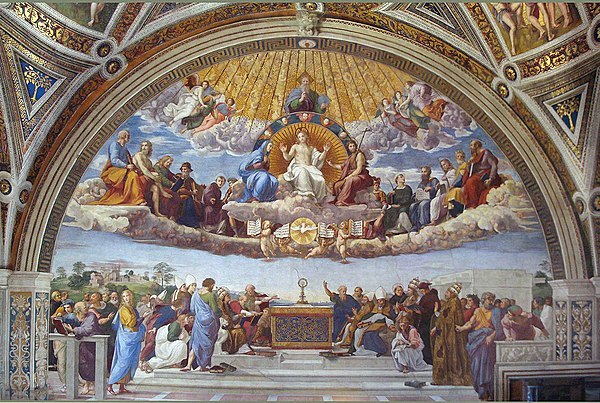
Just be glad she didn't get a chance to "restore" this one...
In Western music, we have a twelve note scale and what boils down to three main chords, I, IV, and V. The atonalists Berg, Schoenberg, and Webern thought they were being clever when they “broke” tonality by forcing a new form of music composition called serial music. Serial music is composition via tone rows, which takes Math for Dummies and applies it to the 12 note scale to deliberately randomize it. The result is music without coherence that always sounds like a horror movie soundtrack no matter what instruments are used to create the piece. Musique concrete is almost always a bunch of random creepy haunted house sounds interspersed with the computerized version of intestinal gas. That is to say, it sucks.
“Thus the strategic configuration of power of those that excel in warfare is sharply focused, their constraints are precise," says Sun Tzu. The beauty of a John Prine song is its limits. The chords he plays on his guitar aren’t especially exotic. Every now and then he’ll use a secondary dominant, but that’s a common enough chord usage that it is featured in Jingle Bells and Happy Birthday. His whole illustrious career, from its beginnings in the Chicago suburb of Maywood to his death in Nashville, was based on singing while strumming a guitar. Like a fellow music icon, Johnny Cash, he wasn’t a fan of overcomplexity. Prine’s unorthodoxy was his especially beautiful voice, exquisitely crafted lyrics, and the X factor. The X factor, that undefineable je ne sai quois that makes John Prine’s music great, is what he did within the strict confines of song form. His music may have been quieter and less edgy than Berg’s screechy operas and Schaefer’s sampled train commute, but he knew instinctively that limits are power, and for that, Prine’s songs are much more likely to survive into the distant future... thank the gods!

In Which I Complain About Music
Aug. 26th, 2020 11:49 am
Before I begin criticizing the state of music as I see it, let me first expose some of my own failures as a musician. I am only truly excellent in two areas of music and neither of them is performance. One: I have a profound grasp of music theory and an ear to match. Two: I'm extremely good at spitting out new melodies and harmonies, and a good proportion of them are catchy, including the zillion ones I compose for my cat and throw out. In every other aspect of musicianship, I consider myself moderately skilled to mediocre. I am a lousy sightreader, a middle of the road pianist, a semi-okay guitarist, a decent but unexceptional singer, and until the last decade, a late-blooming slow learner who was still learning certain Music 201 basics in her twenties because of a combination of mental blocks and sheer laziness. One of the reasons I am a good teacher of music is because I'm not a virtuoso performer. I still know what it is to struggle, and I don't have to delve that far into my past to remember being mystified by various realms of musical study.
Take any opinion of mine, on the subject of music or otherwise, with a grain of salt. I am not a concert pianist and my original music is obscure and unknown. Nevertheless, I reserve strong opinions about music.
Opera Sucks
There are some operas, La Boheme, for instance, that are intensely beautiful and moving. If you are given a synopsis of the story beforehand or understand sung Italian, there are operas that will change your life. The problem is one of "having to be there." Most of us cannot afford to see an opera. For one, if we live near a city where an opera is being staged by a great troupe of musical artists including a pit orchestra and opera singers, there is the problem of not being able to get the time off to make a night of traveling into the city as well as the cost of transportation, opera tickets, and a meal before or after. Operas aren't short -- if you have the privilege of seeing one, you'll need to stop and eat. It's no wonder that the dwindling audiences that used to partially fill the opera house and the symphony center were largely white, old, and well-monied. Nobody else had the resources to try opera, and opera, like symphonic music, is far better experienced live. Music is a largely etheric phenomenon. For those of you who don't know what the etheric plane is, consider it to be the plane of energy that is akin to the Force in Star Wars movies. The special energy of live music cannot be had any other way.
Another problem with opera is the singers. They're what Randy from American Idol calls "pitchy". I can sing loud and on pitch. It's a matter of projection. I know it's not impossible; the reason people come to me for voice lessons is because I know how to project without screaming or becoming pitchy. It's a technique. I'm not sure why so many famed opera singers pile onto the extra vibrato train, but they do, and though it raises the snob appeal of opera, for me it ruins otherwise lovely pieces of music. These singers have as good or better aural capabilities than I do, so why do they flail around the pitch like a bee closing in on a coneflower? Vibrato is like perfume: a little goes a long way. Kiri Te Kanawa bathes in Chanel No. 5 as far as my ears are concerned. I can tell her ear is impeccable but I cannot stand to listen to her. Renée Fleming is more pleasant; at least she hits the notes reliably with a minimum of vibrato. I do tend to enjoy Purcell and other early operas because their style doesn't mandate as much vibrato, but overall, the matronly, rooster crow warblings of opera singers make me cringe.
Museum Music
Most of the music we are expected to like and preserve is museum music. We are supposed to love everything Mozart, Haydn, Brahms, and Wagner ever wrote because they have been listed as the greats. I often find Mozart's pieces stilted or syrupy. I know I'm not allowed to say that. I can already hear the thousand rallying cries of "but that's the Rococo era and the neo-Classic revival" blah de blah. If you are enjoying this sacrilege, Haydn is boring most of the time. He has about two album's worth of great tunes and the rest is filler. What do you expect from a guy whose comfortable lifestyle depended on being a music mill for a pathologically bored prince? Wagner's music is awful to all except the chosen few who understand him, and I am not one of those chosen few. Don't even get me started on atonal music and any form of Musique Concrete. It's garbage and the people who write it are delusional. One of their delusions is that they are making music.
Sadder yet is the attempt to revive what is called classical music (I think Classic Music is a more fitting term, because like Classic Rock, it implies a vintage) via "new" composers. Yes, I have heard of Alma Deutscher. Have you heard of Marian McPartland? She's the kind of vital composer/educator I hope Deutscher becomes when she grows up.
The Music of Our Time
The music of our common era has always displeased me. Who knew the I-IV-V chord progression had so many iterations? Or the I-vi-IV-V? Layer that crap over an annoying beat and throw on some ear-shredding, autotuned vocals and you have a hit ad jingle ahem I mean pop song. Modern tunes ALL sound like ad jingles. Music has gotten so bad, the only way a pop star can glean a modicum of attention is via softcore porn in the form of music videos. I would not be even slightly surprised if the sleazebag influencers (I refuse to call them artists, they're not) creating this tripe resorting to full on X rated porno featuring penetration in order to shock jaded youngsters into watching their torpefying sexual antics. Cardi B keeps writing the same "song" over and over. She requires a team of producers to do what unknown teenagers do in their basements with freeware. Unfortunately for her and fortunately for us, her career will be over in less than a decade. Let's just hope she doesn't resort to the desperate antics I mentioned earlier in this paragraph as her youth fades.
Rap
Speaking of Cardi B, was there ever a whinier, lazier, greedier, or sleazier genre than American rap? When rap began, it was fun and edgy. It was the music of the people, not of the producers. Though swearing to a rhyme scheme to a looping ad jingle is more impressive than free verse or prose, like constant in-your-face sexuality, it's Dullsville. Any tune that contains rap these days has one or more of these three obsessive themes:
1.) Money. "I have more money than you, ha ha, I'm so rich."
2.) Cheap, exploitative sex.
3.) Ego. "I'm better than you because you're a loser and I'm not."
Sadly, these themes have spread to infect almost all pop music. Note to the would-be pop music artists out there: pick a theme that has nothing to do with money, sexual relationships, or how much better you are than your rivals, I double dog dare you.
Autotune
Autotune is everywhere in vocal music. It's in rap, it's in pop, it's in musicals, it's even in country music. If I am ever shot into space, I believe I will be able to detect the frosty, clipped chirrup of autotune from 15,000 miles before simultaneously freezing and exploding, I hate it that much. Like vibrato, autotune is fine in tiny doses, but does anyone ever use it that way? No. I am a professional at pitch-correction, and because I know how to do it, I know how lazy the modern audio engineer is when it comes to batch correcting vocals. Just make the singer do it again, for crying out loud. Hard drives are cheap, yet the economy with which tracks are autotuned makes me think these bigwigs are still working with analog tape decks in their rigs. How else do you explain that much editing on such a tiny bit of material?
Excuses
The above condemnation is a massive oversimplification of what music is out there. I may like to kvetch, but all in all it is a great time to be a musician. Never before has it been so easy to record your own music. There is a whole world out there beyond the two styles I complain about in this article, and I highly suggest you explore it. Within the two realms I described, there are great artists and performances. Beyond them lie entire realms of musical magic. If I have any hope of making musical magic myself, may the gods help me! That's why I'm going to wrap this up now, because my tunes have not yet learned to write and produce themselves!


