My Garden Spring 2021 Plus Cedric Update!
May. 5th, 2021 02:18 pm![[personal profile]](https://www.dreamwidth.org/img/silk/identity/user.png) kimberlysteele
kimberlysteeleThe state of my Northern Illinois garden as of Spring 2021... we moved to this house 5 years ago and it was a blank slate. The house was formerly owned the house was tiny, old, and in terrible shape and so was the yard. Upon moving in, we had no other choice than to remove two mostly dead Siberian elms that threatened to fall down on the house. Once the elms were gone, the yard had nothing in it except grass and a large pile of junk in the back.
The first tree to go in was a Home Depot pear tree that is pretty enough, but has yet to bloom. The second was a pussy willow that started as a handful of twigs from my neighbor's bush. Her name is Saille. We almost thought Saille wasn't going to make it for a few windy city years, but she has survived and is now thriving. The next tree was a maple seedling, one of thousands deposited by the old pair of maples on the parkway. After that came Cedric, the rescued sapling from the area behind my work. Finally, there was the baby oak, the one I've asked for prayers for at JMG's Ecosophia Magic Monday.
The rest of the garden is a learning curve, for sure. We are in Zone 5, which means hard winters that arrive in January and last until early March, unless it is a rough winter year, and then the winter lasts from late October until early April.
Ms. Piggy is one of our feral cats who you can see in the background at the edge of the fence on the ground if you look closely. She is the mother of Tommy, the white-orange feral who lets me pet him.
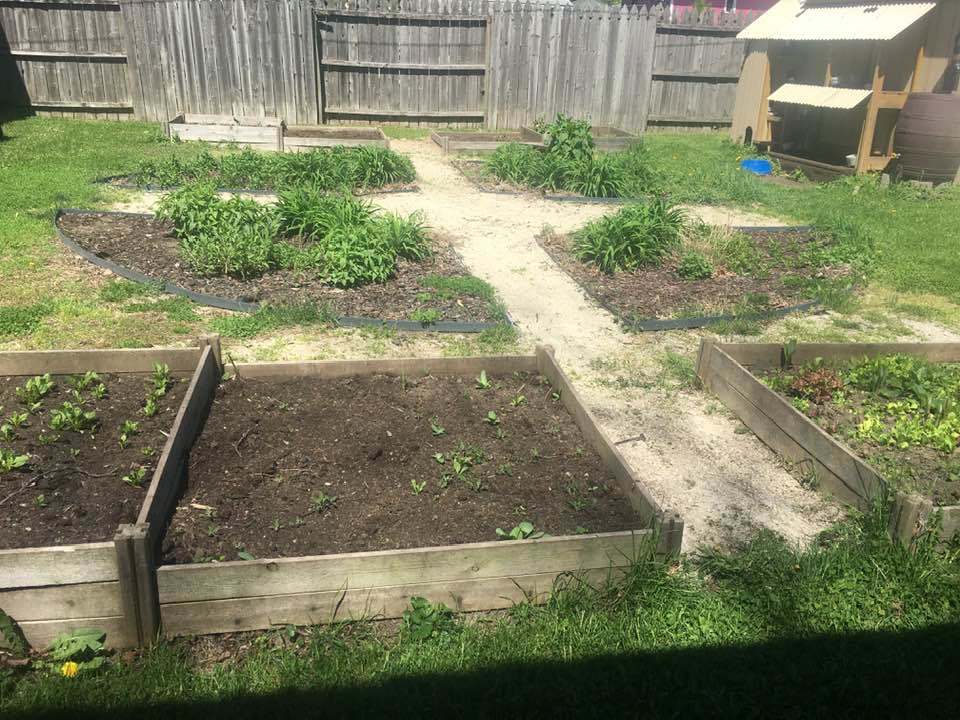
The Celtic cross garden. It's laid out in gravel. Can't say I am a fan of gravel: it likes to travel, specifically indoors. Plus it is a pain to keep weeded. The brick my husband laid in the front is much easier, especially when we need to get the leaves or snow off the walk.
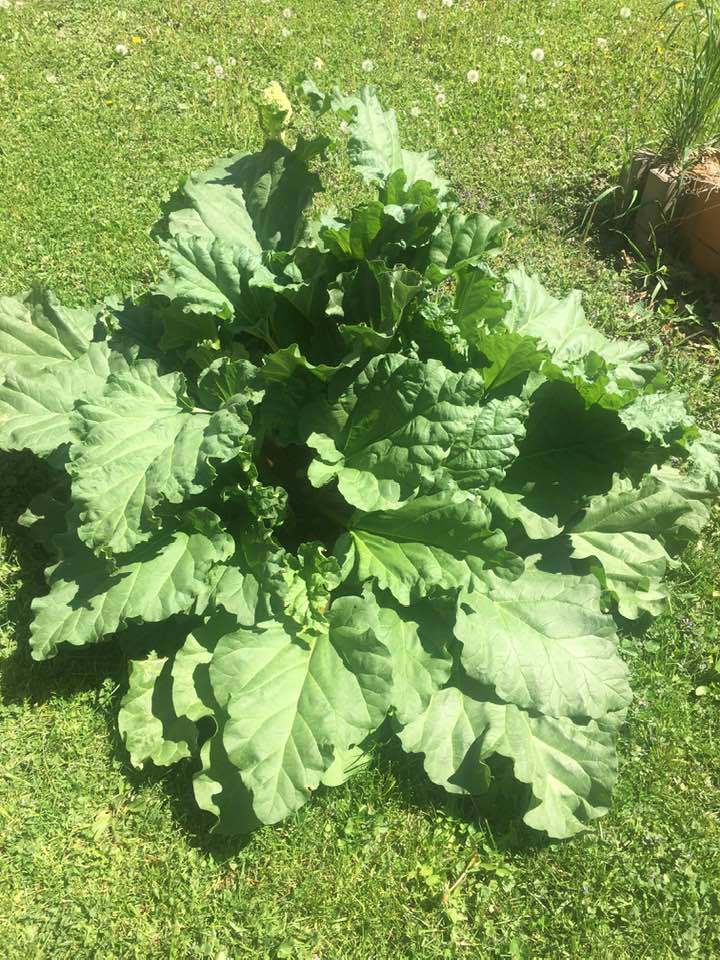
My friend Ted gave me this gorgeous division of his grandpa's heirloom rhubarb a few years ago. It makes for great rhubarb cobbler!
Yarrow in the Celtic garden. There is some lavender in that quadrant as well and a big hyssop. I'm most likely going to dry or tincture most of the herbs in the Celtic garden this year. I love how yarrow spreads!

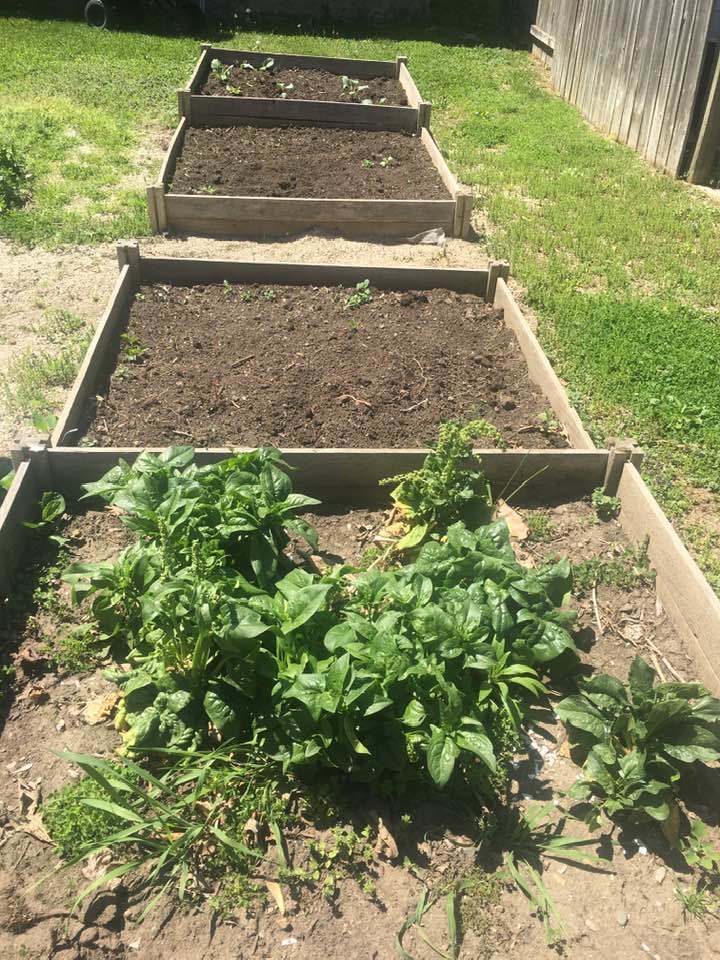
This spinach survived the hard Illinois winter! I threw an old window over the bed to keep the worst of the frosts off. My friend's Russian kale survived too, so I'm hardly unique.
Wild monarda, a regional native that I include in my Northern Illinois Prairie Ogham. There's also a sage I bought last year and oregano.

Side garden area with a volunteer spurge (the dark brown purple thing) and hostas. All of the hostas were divisions from my parent's garden... we don't buy hostas!

Boxwoods were a disaster this year. Every single one that was touched by snow-melting salt got blighted beyond recognition. I lost about half of them. I propagated a few of them from cuttings and those are the ones you see in the pots. Nevertheless, aside from propagating the ones I have, I think I'm done with boxwoods. They just don't do well in northern Illinois.

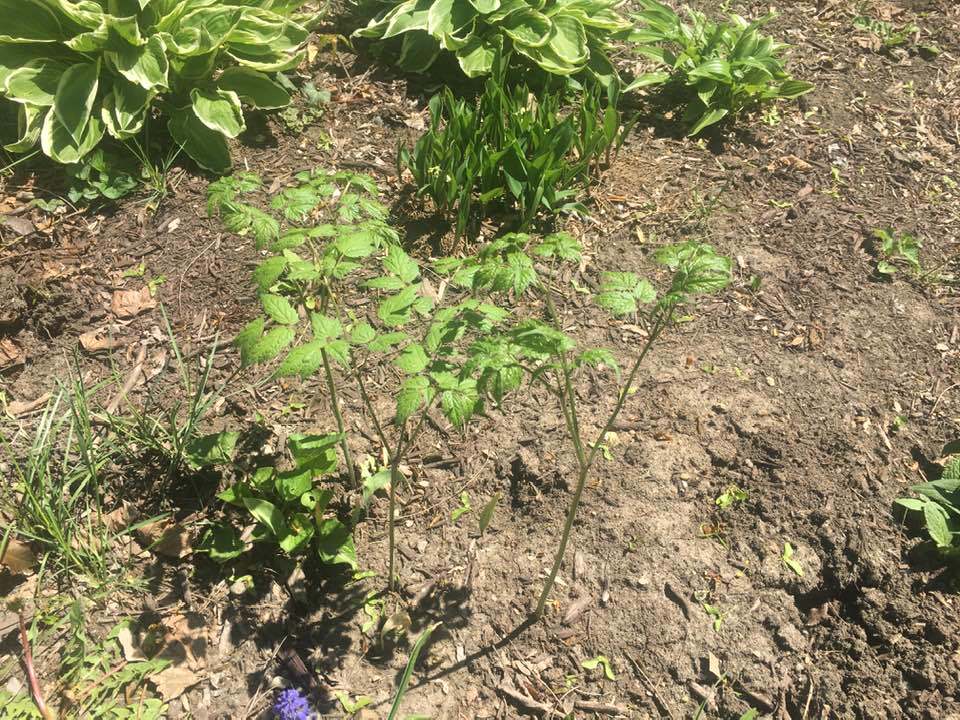
I thought my black cohosh had died last year... it was a division from my parents' garden. Black Cohosh is a Midwestern native and its root is good for treating hot flashes and other women's hormonal ailments. I was absolutely delighted when it came back!
More of the side yard. There are ferns, hostas, spurge, catmint, a pink phlox (though it may have died) ivy, the aforementioned black cohosh, and lily of the valley.

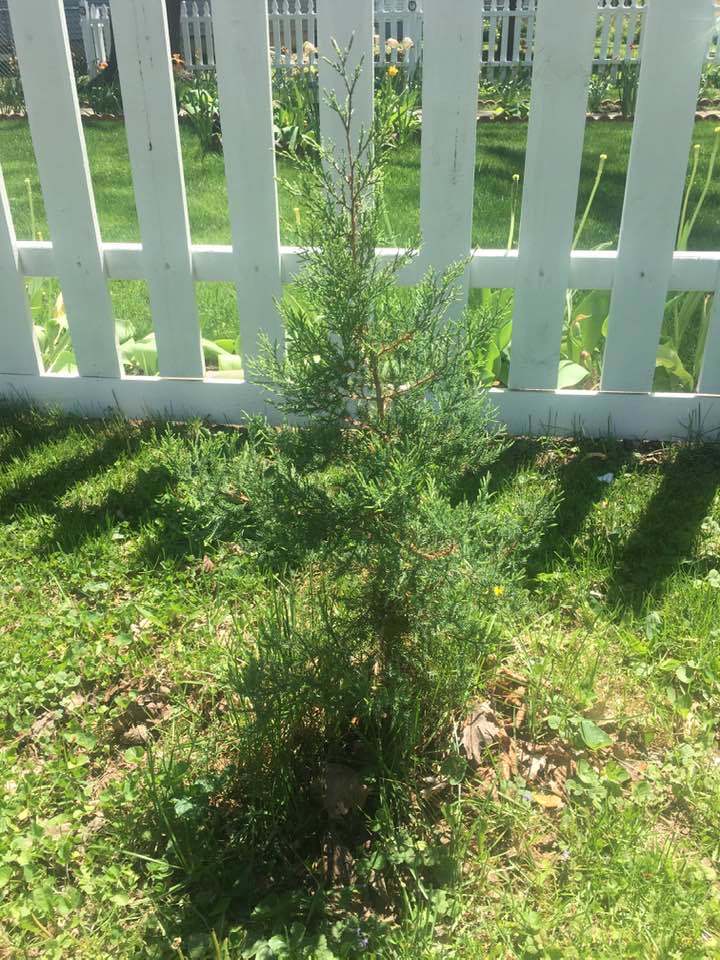
Cedric is doing great! I made sure I watered him (he might be a she, actually, and if it is, I'll call her Cedrica) all throughout the dry summer last year. He/she got a bit taller just in the last few weeks.
The baby oak! I found this oak sapling in my garden -- there is a great big oak in the neighbor's yard I believe it descended from. My hopes are that it will become huge and live long after I die!

The first tree to go in was a Home Depot pear tree that is pretty enough, but has yet to bloom. The second was a pussy willow that started as a handful of twigs from my neighbor's bush. Her name is Saille. We almost thought Saille wasn't going to make it for a few windy city years, but she has survived and is now thriving. The next tree was a maple seedling, one of thousands deposited by the old pair of maples on the parkway. After that came Cedric, the rescued sapling from the area behind my work. Finally, there was the baby oak, the one I've asked for prayers for at JMG's Ecosophia Magic Monday.
The rest of the garden is a learning curve, for sure. We are in Zone 5, which means hard winters that arrive in January and last until early March, unless it is a rough winter year, and then the winter lasts from late October until early April.
Ms. Piggy is one of our feral cats who you can see in the background at the edge of the fence on the ground if you look closely. She is the mother of Tommy, the white-orange feral who lets me pet him.
The Celtic cross garden. It's laid out in gravel. Can't say I am a fan of gravel: it likes to travel, specifically indoors. Plus it is a pain to keep weeded. The brick my husband laid in the front is much easier, especially when we need to get the leaves or snow off the walk.
My friend Ted gave me this gorgeous division of his grandpa's heirloom rhubarb a few years ago. It makes for great rhubarb cobbler!
Yarrow in the Celtic garden. There is some lavender in that quadrant as well and a big hyssop. I'm most likely going to dry or tincture most of the herbs in the Celtic garden this year. I love how yarrow spreads!
This spinach survived the hard Illinois winter! I threw an old window over the bed to keep the worst of the frosts off. My friend's Russian kale survived too, so I'm hardly unique.
Wild monarda, a regional native that I include in my Northern Illinois Prairie Ogham. There's also a sage I bought last year and oregano.
Side garden area with a volunteer spurge (the dark brown purple thing) and hostas. All of the hostas were divisions from my parent's garden... we don't buy hostas!
Boxwoods were a disaster this year. Every single one that was touched by snow-melting salt got blighted beyond recognition. I lost about half of them. I propagated a few of them from cuttings and those are the ones you see in the pots. Nevertheless, aside from propagating the ones I have, I think I'm done with boxwoods. They just don't do well in northern Illinois.
I thought my black cohosh had died last year... it was a division from my parents' garden. Black Cohosh is a Midwestern native and its root is good for treating hot flashes and other women's hormonal ailments. I was absolutely delighted when it came back!
More of the side yard. There are ferns, hostas, spurge, catmint, a pink phlox (though it may have died) ivy, the aforementioned black cohosh, and lily of the valley.
Cedric is doing great! I made sure I watered him (he might be a she, actually, and if it is, I'll call her Cedrica) all throughout the dry summer last year. He/she got a bit taller just in the last few weeks.
The baby oak! I found this oak sapling in my garden -- there is a great big oak in the neighbor's yard I believe it descended from. My hopes are that it will become huge and live long after I die!


no subject
Date: 2021-05-06 02:31 am (UTC)How do you keep squirrels away? My neighbor has a squirrel feeder so I’ve about given up trying to grow anything that tastes good.
—Lady Cutekitten
no subject
Date: 2021-05-06 02:47 am (UTC)no subject
Date: 2021-05-06 09:52 pm (UTC)—Lady Cutekitten
no subject
Date: 2021-05-07 03:25 am (UTC)